# Alquimedez Mental Health Counseling
Mental Health Virtual Treatment Care
- Site: https://www.alquimedez.com/
## Mental Health Wellness: A Complete Guide for 2026
- Link: https://www.alquimedez.com/mental-health-wellness
- Published: 2026-08-16T07:01:55+00:00
- Author:
Mental health wellness represents more than the absence of illness. It encompasses
emotional balance, psychological resilience, and the capacity to navigate life's
challenges with adaptive coping strategies. In 2026, understanding mental health
wellness has become essential for individuals facing substance abuse concerns, legal
evaluations, immigration-related stress, and workplace pressures. Professional mental
health services provide critical support through comprehensive assessments, evidence-
based interventions, and specialized counseling tailored to diverse needs.
## Understanding Mental Health Wellness in Contemporary Society
Mental health wellness reflects a dynamic state of well-being where individuals
recognize their abilities, cope with normal life stresses, work productively, and
contribute to their communities. [The National Institute of Mental Health (NIMH) offers authoritative information](https://www.nimh.nih.gov/health)
demonstrating that mental health wellness exists on a continuum rather than as a
binary state. This understanding transforms how professionals approach assessments
and treatment planning.
The contemporary definition extends beyond traditional clinical frameworks. Mental
health wellness incorporates social connections, purpose-driven activities, emotional
regulation skills, and physical health integration. These components interact continuously,
creating personalized wellness profiles that change across life stages and circumstances.
### Core Dimensions of Mental Health Wellness
Mental health wellness comprises several interconnected dimensions that professionals
evaluate during comprehensive assessments:
1. **Emotional awareness and regulation** – Recognizing feelings and managing responses
appropriately
2. **Cognitive flexibility** – Adapting thinking patterns to new information and situations
3. **Social connection quality** – Maintaining meaningful relationships and support
networks
4. **Physical health integration** – Understanding how bodily wellness affects mental
states
5. **Purpose and meaning** – Engaging in activities aligned with personal values
6. **Environmental mastery** – Navigating daily demands and creating supportive contexts
Specialized services like [behavioral health consultants](https://www.alquimedez.com/behavioral-health-consultants)
assess these dimensions to create targeted intervention strategies. Understanding
these elements helps individuals identify specific areas requiring professional
support.

## Professional Assessment Approaches for Mental Health Wellness
Professional assessments form the foundation of effective mental health wellness
interventions. These evaluations employ standardized instruments, clinical interviews,
and observational data to create comprehensive wellness profiles. In 2026, assessment
practices integrate traditional psychological testing with innovative digital tools
and culturally sensitive frameworks.
### Substance Abuse Assessments
Substance use significantly impacts mental health wellness, requiring specialized
evaluation protocols. Professional assessments examine consumption patterns, physiological
dependencies, psychological factors, and functional impairments across life domains.
These evaluations distinguish between experimental use, problematic patterns, and
substance use disorders requiring intensive intervention.
Assessment protocols typically include:
1. Detailed substance use history spanning types, quantities, frequencies, and contexts
2. Medical history review identifying health complications and contraindications
3. Mental health screening detecting co-occurring disorders affecting treatment
4. Social and occupational functioning analysis revealing life impact
5. Motivation and readiness evaluation informing intervention timing
6. Risk assessment identifying immediate safety concerns
[Alcohol assessments for court-mandated evaluations](https://www.alquimedez.com/alcohol-assessment-for-court)
require particular attention to legal standards while maintaining clinical integrity.
These assessments balance judicial requirements with therapeutic objectives, creating
pathways toward sustainable mental health wellness.
### Court-Mandated Psychological Evaluations
Legal proceedings frequently require psychological evaluations to inform judicial
decisions. These assessments maintain strict professional standards while addressing
specific legal questions. Mental health wellness considerations within court contexts
examine decision-making capacity, risk factors, treatment needs, and rehabilitative
potential.
Professionals conducting [court-mandated evaluations](https://www.alquimedez.com/court-mandated)
navigate complex ethical boundaries. They maintain objectivity while gathering comprehensive
data about psychological functioning, environmental circumstances, and wellness
trajectories. These evaluations often determine access to treatment resources, child
custody arrangements, criminal sentencing outcomes, and civil competency determinations.
| Assessment Type | Primary Focus | Key Outcomes |
| Substance Abuse | Use patterns, dependencies, treatment needs | Treatment recommendations, relapse prevention |
| Immigration Psychological | Trauma history, mental health status, hardship documentation | Supporting legal petitions, treatment planning |
| Competency Evaluations | Decision-making capacity, understanding of proceedings | Court recommendations, protective interventions |
| Risk Assessments | Violence potential, recidivism factors, safety planning | Risk management strategies, supervision levels |
## Immigration-Related Mental Health Wellness Challenges
Immigration experiences create unique mental health wellness challenges requiring
specialized professional attention. Displacement, cultural adjustment, language
barriers, documentation uncertainty, and separation from support networks generate
significant psychological stress. Many individuals navigating immigration processes
experience trauma, anxiety, depression, and complex grief requiring comprehensive
evaluation and treatment.
Immigration-related psychological evaluations document mental health conditions,
trauma histories, and potential consequences of deportation or family separation.
These assessments provide critical evidence supporting various immigration petitions
including asylum claims, hardship waivers, U-visas for crime victims, and VAWA petitions
for domestic violence survivors.
Professional evaluators gather detailed personal histories, conduct mental status
examinations, administer psychological testing, and integrate collateral information
from medical records and witness statements. The resulting reports bridge clinical
findings with legal requirements, demonstrating how immigration outcomes directly
impact mental health wellness trajectories.
### Cultural Competence in Mental Health Wellness Services
Effective mental health wellness services require cultural competence that recognizes
diverse worldviews, healing traditions, and communication styles. Professionals
must understand how cultural backgrounds shape symptom expression, help-seeking
behaviors, and treatment preferences. This awareness prevents misdiagnosis and builds
therapeutic relationships grounded in respect and understanding.
Cultural competence extends beyond demographic knowledge. It requires self-awareness
about personal biases, ongoing education about diverse communities, and flexibility
in adapting evidence-based practices to cultural contexts. [Practical self-care tips and guidance from NIMH](https://www.nimh.nih.gov/health/topics/caring-for-your-mental-health)
emphasize culturally responsive approaches that honor individual preferences while
maintaining clinical effectiveness.

## Evidence-Based Interventions Supporting Mental Health Wellness
Mental health wellness improves through evidence-based interventions tailored to
individual needs, preferences, and circumstances. Professional services integrate
therapeutic modalities, medication management when appropriate, lifestyle modifications,
and community resources. The intervention selection process considers assessment
findings, treatment goals, practical constraints, and client motivation levels.
### Therapeutic Modalities Promoting Wellness
Contemporary mental health services employ diverse therapeutic approaches with established
effectiveness:
1. **Cognitive Behavioral Therapy (CBT)** – Modifying thought patterns and behaviors
contributing to distress
2. **Dialectical Behavior Therapy (DBT)** – Building emotion regulation and distress
tolerance skills
3. **Trauma-Focused Therapy** – Processing traumatic experiences reducing psychological
impact
4. **Motivational Interviewing** – Enhancing readiness for behavioral change
5. **Family Systems Therapy** – Addressing relational patterns affecting individual
wellness
6. **Mindfulness-Based Interventions** – Cultivating present-moment awareness and
acceptance
These approaches adapt to various contexts including individual therapy, group interventions,
family counseling, and crisis support. Professionals select modalities based on
empirical support for specific conditions, client preferences, and practical accessibility
considerations.
### Complementary and Integrative Approaches
Mental health wellness benefits from complementary approaches alongside traditional
interventions. [The National Center for Complementary and Integrative Health discusses](https://www.nccih.nih.gov/health/mental-health)
various strategies including meditation, yoga, acupuncture, and nutritional interventions.
These approaches often enhance conventional treatment effectiveness when integrated
thoughtfully.
Complementary strategies require professional guidance ensuring safety and appropriateness.
Some individuals benefit from exercise programs addressing both physical and mental
health. Others find value in creative arts therapies, animal-assisted interventions,
or nature-based activities. The key involves evidence-informed selection matching
interventions to individual needs and treatment goals.
## Workplace Mental Health Wellness and Corporate Training
Organizations increasingly recognize that employee mental health wellness directly
impacts productivity, retention, safety, and organizational culture. Corporate training
programs educate leadership and staff about mental health awareness, stress management,
supportive communication, and resource navigation. These initiatives reduce stigma
while creating psychologically healthier work environments.
Workplace mental health wellness programs typically include:
1. Mental health literacy training helping employees recognize distress signs
2. Stress management workshops teaching practical coping strategies
3. Crisis response protocols ensuring appropriate intervention during emergencies
4. Manager training developing skills for supportive supervision
5. Resource awareness connecting employees with professional services
6. Accommodation processes supporting individuals with mental health conditions
Specialized consulting services design culturally appropriate programs addressing
industry-specific stressors. International corporations require training sensitive
to diverse cultural norms and regulatory frameworks. High-stress environments including
healthcare, emergency services, and finance need targeted interventions addressing
occupational trauma and burnout prevention.
| Workplace Wellness Component | Implementation Strategy | Expected Outcomes |
| Prevention Education | Monthly workshops, online modules | Increased awareness, reduced stigma |
| Early Intervention | Supervisor training, screening tools | Earlier treatment access, reduced severity |
| Crisis Management | Clear protocols, trained responders | Effective emergency response, safety |
| Ongoing Support | EAP services, peer programs | Sustained wellness, reduced absenteeism |
## Bariatric Counseling and Mental Health Wellness
Bariatric surgery candidates and recipients face unique mental health wellness considerations
requiring specialized counseling. Pre-surgical psychological evaluations assess
readiness, identify contraindications, and establish baseline mental health status.
Post-surgical support addresses adjustment challenges, body image concerns, relationship
changes, and potential psychological complications.
Bariatric counseling explores motivations for surgery, eating behaviors, coping
mechanisms, social support availability, and realistic expectations. Professionals
evaluate for contraindications including active substance abuse, untreated severe
mental illness, and inadequate understanding of surgical requirements. These assessments
protect patient safety while identifying individuals requiring additional mental
health support before proceeding.
Post-surgical mental health wellness involves ongoing monitoring and intervention
as needed. Some individuals experience depression, anxiety, or eating disorder symptoms
following dramatic weight changes. Others struggle with excess skin, altered self-
perception, or relationship dynamics. Professional counseling provides essential
support navigating these transitions while maintaining psychological wellness.
### Eating Behavior and Psychological Wellness
The relationship between eating behaviors and mental health wellness extends beyond
bariatric contexts. Emotional eating, restrictive patterns, binge episodes, and
preoccupation with food often reflect underlying psychological distress. Professional
assessment distinguishes between primary eating disorders and secondary eating concerns
related to other mental health conditions.
Treatment approaches address both behavioral patterns and psychological factors.
Nutritional counseling combines with therapy targeting emotional regulation, stress
management, and cognitive restructuring. Family involvement often enhances outcomes,
particularly when household dynamics influence eating behaviors. [Understanding health issues comprehensively](https://www.alquimedez.com/health-issues)
requires examining these interconnected factors.

## International Crisis Consulting and Mental Health Wellness
Global crises including natural disasters, political conflicts, pandemics, and humanitarian
emergencies create widespread mental health wellness challenges. International crisis
consulting provides specialized expertise supporting organizations, governments,
and NGOs responding to these situations. Services include needs assessment, intervention
design, staff training, and program evaluation.
Crisis contexts require rapid deployment of culturally appropriate mental health
services. Professionals balance immediate psychological first aid with longer-term
mental health system strengthening. They train local providers, establish referral
networks, integrate mental health into primary care, and advocate for sustainable
funding supporting ongoing wellness initiatives.
International consulting navigates complex challenges including:
1. Language diversity requiring interpretation and translated materials
2. Cultural variations in mental health conceptualization and help-seeking
3. Resource limitations affecting service delivery models
4. Security concerns impacting provider safety and program implementation
5. Coordination needs across multiple organizations and government entities
6. Ethical considerations regarding intervention appropriateness and sustainability
## Self-Care Strategies Supporting Mental Health Wellness
While professional services provide essential support, personal self-care practices
form the foundation of sustained mental health wellness. Individuals benefit from
developing personalized wellness routines incorporating multiple strategies. Effective
self-care requires experimentation, consistency, and adaptation as circumstances
change.
Evidence-based self-care approaches include:
1. **Sleep hygiene** – Maintaining consistent schedules and creating restful environments
2. **Physical activity** – Engaging in regular movement matching fitness levels
3. **Nutrition** – Consuming balanced diets supporting brain and body health
4. **Social connection** – Nurturing relationships and seeking community involvement
5. **Stress management** – Practicing relaxation techniques and setting boundaries
6. **Purpose cultivation** – Engaging in meaningful activities aligned with values
7. **Digital boundaries** – Limiting technology use affecting sleep and stress
8. **Professional support** – Accessing counseling, therapy, or coaching when needed
[Evidence-based resources on mental health and wellness](https://www.mentalhealth.com/library)
provide detailed guidance on implementing these strategies. The key involves selecting
approaches matching individual preferences, capabilities, and life circumstances
rather than following generic prescriptions.
## Recognizing When Professional Support Is Needed
Mental health wellness exists on a continuum, and most individuals experience periods
of distress throughout life. Recognizing when professional support is needed prevents
conditions from worsening and facilitates earlier intervention when treatment effectiveness
is highest. Several indicators suggest professional assessment would be beneficial.
Warning signs include:
1. Persistent sadness, anxiety, or irritability lasting several weeks
2. Significant changes in sleep, appetite, or energy levels
3. Difficulty fulfilling work, school, or family responsibilities
4. Social withdrawal or isolation from previously enjoyed relationships
5. Increased substance use as a coping mechanism
6. Thoughts of self-harm or suicide
7. Trauma exposure causing ongoing distress or functioning changes
8. Physical symptoms without clear medical explanation
Professional services provide comprehensive assessment determining appropriate intervention
levels. Some situations require intensive treatment including hospitalization or
residential programs. Others respond well to outpatient therapy, medication management,
or supportive counseling. [Understanding when to seek help](https://www.alquimedez.com/healthy-mentally)
represents an important mental health wellness skill.
## Technology and Mental Health Wellness Innovation
Technology increasingly supports mental health wellness through teletherapy platforms,
mental health apps, online peer support, and artificial intelligence applications.
These innovations expand access for individuals facing geographic, financial, or
scheduling barriers to traditional services. However, technology complements rather
than replaces professional clinical relationships for most individuals.
Digital mental health tools offer various features including mood tracking, meditation
guidance, cognitive behavioral therapy exercises, and crisis resource access. Some
applications use machine learning to personalize recommendations based on user data.
[Innovative approaches in mental health technology](https://arxiv.org/abs/2607.02245)
demonstrate how AI systems can expand access to wellness support while maintaining
human-centered design principles.
Quality and effectiveness vary significantly across digital mental health products.
Individuals benefit from selecting evidence-based applications developed with professional
oversight. Privacy protection, data security, and clinical accuracy represent important
evaluation criteria when choosing technology tools supporting mental health wellness.
## Building Resilience Through Mental Health Wellness Practices
Resilience reflects the capacity to adapt successfully despite adversity, trauma,
or significant stress. Mental health wellness practices build resilience by developing
psychological flexibility, expanding coping repertoires, strengthening social support,
and cultivating optimistic yet realistic thinking patterns. Resilience is not innate
but develops through intentional practice and supportive environments.
Resilience-building strategies include:
1. Developing problem-solving skills addressing challenges systematically
2. Cultivating self-compassion during difficult experiences
3. Building diverse coping strategies matching different stressor types
4. Maintaining perspective recognizing temporary nature of most difficulties
5. Seeking meaning and growth opportunities within adversity
6. Nurturing supportive relationships providing encouragement and assistance
7. Taking care of physical health supporting psychological resilience
8. Practicing acceptance of unchangeable circumstances while addressing controllable
factors
Professional services support resilience development through skill-building interventions,
processing past traumas interfering with adaptive coping, and addressing mental
health conditions undermining resilience. [Research on wellness dimensions](https://arxiv.org/abs/2406.12058)
contributes to understanding how different psychological factors interact to support
or undermine resilience capacity.
---
Mental health wellness requires ongoing attention, professional support when needed,
and personalized self-care practices supporting emotional balance and psychological
resilience. Whether navigating substance abuse concerns, legal evaluations, immigration
stress, workplace challenges, or life transitions, comprehensive mental health services
provide essential support. [Alquimedez Mental Health Counseling](https://alquimedez.com)
offers specialized assessments, evidence-based treatment, and consulting services
tailored to diverse needs including substance abuse evaluations, court-mandated
assessments, immigration psychological evaluations, international crisis consulting,
corporate training, and bariatric counseling.
```language-json
{
"@context": "https://schema.org",
"@graph": [
{
"@type": "Article",
"headline": "Mental Health Wellness: A Complete Guide for 2026",
"description": "Comprehensive guide to mental health wellness covering professional assessments, evidence-based interventions, workplace programs, and self-care strategies.",
"author": {
"@type": "Organization",
"name": "Alquimedez Mental Health Counseling",
"url": "https://alquimedez.com"
},
"publisher": {
"@type": "Organization",
"name": "Alquimedez Mental Health Counseling",
"logo": {
"@type": "ImageObject",
"url": "https://alquimedez.com/logo.png"
}
},
"datePublished": "2026-08-16",
"dateModified": "2026-08-16",
"mainEntityOfPage": {
"@type": "WebPage",
"@id": "https://alquimedez.com/mental-health-wellness"
}
},
{
"@type": "LocalBusiness",
"name": "Alquimedez Mental Health Counseling",
"description": "Comprehensive mental health services including assessments for substance abuse, court-mandated evaluations, and immigration-related psychological evaluations. Specialized consulting services for international crisis, corporate training, and bariatric counseling.",
"@id": "https://alquimedez.com",
"url": "https://alquimedez.com",
"telephone": "",
"priceRange": "$$",
"address": {
"@type": "PostalAddress",
"addressLocality": "",
"addressRegion": "",
"addressCountry": "US"
},
"serviceType": [
"Mental Health Counseling",
"Substance Abuse Assessment",
"Court-Mandated Evaluation",
"Immigration Psychological Evaluation",
"Corporate Training",
"Bariatric Counseling",
"International Crisis Consulting"
]
},
{
"@type": "FAQPage",
"mainEntity": [
{
"@type": "Question",
"name": "What is mental health wellness?",
"acceptedAnswer": {
"@type": "Answer",
"text": "Mental health wellness represents a dynamic state of well-being where individuals recognize their abilities, cope with normal life stresses, work productively, and contribute to their communities. It encompasses emotional balance, psychological resilience, social connections, purpose-driven activities, and the capacity to navigate life's challenges with adaptive coping strategies."
}
},
{
"@type": "Question",
"name": "When should I seek professional mental health support?",
"acceptedAnswer": {
"@type": "Answer",
"text": "Professional support is recommended when experiencing persistent sadness or anxiety lasting several weeks, significant changes in sleep or appetite, difficulty fulfilling responsibilities, social withdrawal, increased substance use, thoughts of self-harm, trauma-related distress, or physical symptoms without clear medical explanation."
}
},
{
"@type": "Question",
"name": "What do substance abuse assessments involve?",
"acceptedAnswer": {
"@type": "Answer",
"text": "Substance abuse assessments include detailed substance use history, medical history review, mental health screening for co-occurring disorders, social and occupational functioning analysis, motivation evaluation, and risk assessment to create comprehensive treatment recommendations."
}
},
{
"@type": "Question",
"name": "How do immigration-related psychological evaluations support mental health wellness?",
"acceptedAnswer": {
"@type": "Answer",
"text": "Immigration-related psychological evaluations document mental health conditions, trauma histories, and potential consequences of deportation or family separation. These assessments provide critical evidence supporting asylum claims, hardship waivers, U-visas, and VAWA petitions while identifying treatment needs for trauma, anxiety, depression, and complex grief."
}
}
]
}
]
}
```
## Bipolar Mental Health: Understanding Diagnosis and Care
- Link: https://www.alquimedez.com/bipolar-mental-health
- Published: 2026-08-15T07:02:20+00:00
- Author:
Bipolar mental health represents one of the most complex and frequently misunderstood
conditions in the mental health landscape. Affecting approximately 2.8% of adults
in the United States, this mood disorder significantly impacts daily functioning,
relationships, and overall quality of life. Understanding the nuances of bipolar
disorder, including its symptoms, diagnostic criteria, and comprehensive treatment
approaches, is essential for individuals experiencing these challenges and their
support networks. Professional mental health services play a crucial role in providing
accurate assessments and evidence-based interventions that help individuals manage
this lifelong condition effectively.
## Understanding Bipolar Mental Health Conditions
Bipolar mental health conditions involve extreme mood fluctuations that extend far
beyond typical emotional ups and downs. These mood episodes include periods of elevated,
energetic behavior (mania or hypomania) and periods of intense sadness or hopelessness(
depression). [The National Institute of Mental Health](https://www.nimh.nih.gov/health/topics/bipolar-disorder)
provides comprehensive information about how these episodes can vary in duration,
intensity, and frequency among individuals.
### Types of Bipolar Disorders
Mental health professionals recognize several distinct types of bipolar mental health
conditions, each characterized by specific patterns of mood episodes.
1. **Bipolar I Disorder** involves at least one manic episode lasting seven days or
requiring hospitalization, often accompanied by depressive episodes
2. **Bipolar II Disorder** features a pattern of depressive episodes with hypomanic
episodes, but never full-blown mania
3. **Cyclothymic Disorder** presents with chronic fluctuating moods involving hypomania
and mild depression over at least two years
4. **Other Specified and Unspecified Bipolar Disorders** encompass symptoms that don't
match the above categories

### Recognizing Manic and Hypomanic Episodes
Manic episodes represent periods of abnormally elevated, expansive, or irritable
mood lasting at least one week. During these episodes, individuals may experience
decreased need for sleep, racing thoughts, increased goal-directed activity, and
engaging in risky behaviors with potential negative consequences.
Key indicators include:
1. Inflated self-esteem or grandiosity
2. More talkative than usual with pressured speech
3. Flight of ideas or racing thoughts
4. Increased distractibility
5. Excessive involvement in pleasurable activities with high risk potential
6. Increased energy without corresponding fatigue
7. Poor judgment in financial or personal decisions
Hypomanic episodes share similar characteristics but are less severe and don't cause
significant impairment in social or occupational functioning. According to [research published by the National Center for Biotechnology Information](https://www.ncbi.nlm.nih.gov/books/NBK558998/),
hypomania lasts at least four consecutive days and represents a noticeable change
from typical behavior.
### Understanding Depressive Episodes
The depressive phase of bipolar mental health conditions can be particularly debilitating.
These episodes involve persistent sadness, hopelessness, and loss of interest in
previously enjoyed activities. They typically last at least two weeks and significantly
impact daily functioning.
| Symptom Category | Common Manifestations |
| Emotional | Persistent sadness, feelings of worthlessness, guilt |
| Physical | Sleep disturbances, appetite changes, fatigue |
| Cognitive | Difficulty concentrating, indecisiveness, memory problems |
| Behavioral | Social withdrawal, decreased productivity, suicidal thoughts |
## Professional Assessment and Diagnosis
Accurate diagnosis of bipolar mental health conditions requires comprehensive evaluation
by qualified mental health professionals. [Professional mental health assessments](https://www.alquimedez.com/mental-health-care-mental-health-assessment)
involve multiple components to ensure proper identification and treatment planning.
### The Diagnostic Process
Mental health professionals use several assessment methods to diagnose bipolar mental
health conditions accurately. The process typically includes detailed clinical interviews,
medical history review, and standardized assessment tools.
1. **Initial Consultation**: Gathering comprehensive information about symptoms, duration,
and impact on functioning
2. **Medical Evaluation**: Ruling out physical health conditions that might mimic
bipolar symptoms
3. **Psychological Testing**: Utilizing validated instruments to assess mood patterns
and severity
4. **Collateral Information**: Speaking with family members or close contacts when
appropriate
5. **Diagnostic Criteria Application**: Comparing symptoms against DSM-5 criteria
for bipolar disorders
The [World Health Organization](https://www.who.int/news-room/fact-sheets/detail/bipolar-disorder)
emphasizes the importance of thorough assessment, noting that misdiagnosis or delayed
diagnosis can lead to inappropriate treatment and worse outcomes.
### Challenges in Diagnosis
Several factors complicate the accurate diagnosis of bipolar mental health conditions.
Many individuals initially seek help during depressive episodes, leading to potential
misdiagnosis as major depressive disorder. The average delay between symptom onset
and correct diagnosis is approximately ten years.
Complicating factors include:
1. Co-occurring mental health conditions such as anxiety disorders or substance use
2. Symptoms overlapping with other psychiatric conditions
3. Individual reluctance to report manic symptoms that may have felt positive
4. Cultural factors affecting symptom expression and help-seeking behavior
5. Lack of insight during manic episodes

## Evidence-Based Treatment Approaches
Managing bipolar mental health effectively requires a multifaceted treatment approach
combining medication, psychotherapy, and lifestyle modifications. Treatment plans
should be individualized based on symptom severity, episode patterns, and personal
circumstances.
### Medication Management
Pharmacological interventions form the foundation of bipolar mental health treatment.
Mood stabilizers help prevent the extreme highs and lows characteristic of the condition.
| Medication Class | Primary Function | Common Examples |
| Mood Stabilizers | Reduce episode frequency | Lithium, Valproate |
| Atypical Antipsychotics | Manage acute mania | Quetiapine, Olanzapine |
| Antidepressants | Address depressive symptoms | Used cautiously with mood stabilizers |
Healthcare providers carefully monitor medication effectiveness and side effects,
adjusting dosages or combinations as needed. Regular blood tests may be necessary
for certain medications to ensure therapeutic levels and monitor organ function.
### Psychotherapy Interventions
Therapeutic approaches complement medication by helping individuals understand their
condition, recognize warning signs, and develop coping strategies. Several evidence-
based psychotherapy modalities have proven effective for bipolar mental health management.
1. **Cognitive Behavioral Therapy (CBT)**: Identifies and modifies thought patterns
contributing to mood episodes
2. **Family-Focused Therapy**: Involves family members in treatment to improve communication
and support
3. **Interpersonal and Social Rhythm Therapy (IPSRT)**: Focuses on stabilizing daily
routines and sleep patterns
4. **Psychoeducation**: Provides comprehensive information about the disorder and
self-management strategies
[Comprehensive mental health care](https://www.alquimedez.com/a-healthy-mind) integrates
these therapeutic approaches with ongoing assessment and support to optimize treatment
outcomes.
## Lifestyle Modifications and Self-Management
Beyond professional treatment, individuals with bipolar mental health conditions
benefit significantly from structured lifestyle modifications. These changes support
mood stability and reduce episode frequency.
### Daily Routine Stabilization
Maintaining consistent daily routines represents a cornerstone of bipolar mental
health management. Regular sleep-wake cycles, meal times, and activity schedules
help regulate circadian rhythms that influence mood stability.
Critical routine elements include:
1. Consistent bedtime and wake time, even on weekends
2. Regular meal schedules with balanced nutrition
3. Scheduled physical activity at the same time daily
4. Limited caffeine and alcohol consumption
5. Stress management practices integrated into daily life
Research demonstrates that individuals who maintain stable routines experience fewer
mood episodes and less severe symptoms. Sleep disruption, in particular, can trigger
both manic and depressive episodes.
### Monitoring and Early Warning Signs
Developing awareness of personal warning signs enables early intervention before
full episodes develop. Many individuals benefit from mood tracking using journals,
apps, or standardized charts.
Effective monitoring includes:
1. Daily mood ratings on a numerical scale
2. Sleep duration and quality tracking
3. Energy level documentation
4. Notable life events or stressors
5. Medication adherence records
6. Early warning sign identification
When warning signs appear, individuals can implement their crisis plan, contact
their mental health provider, and adjust activities to prevent episode escalation.
## Special Considerations in Treatment
Certain populations and circumstances require specialized approaches to bipolar
mental health care. Understanding these considerations ensures appropriate, culturally
sensitive treatment delivery.
### Court-Mandated Assessments
Some individuals require [court assessment services](https://www.alquimedez.com/mental-health-care-court-assessment-service)
related to bipolar mental health conditions. These evaluations provide objective
information about mental health status, treatment needs, and functional capacity
to legal proceedings. Mental health professionals conducting these assessments follow
specific protocols ensuring comprehensive, unbiased evaluation.
### Immigration-Related Evaluations
[Psychological evaluations for immigration proceedings](https://www.alquimedez.com/mental-health-care-psychological-evaluations-for-immigration-court)
may address bipolar mental health as it relates to hardship claims, asylum applications,
or other immigration matters. These specialized assessments document mental health
history, current functioning, and treatment needs within the context of immigration
law requirements.

### Substance Use Considerations
Co-occurring substance use disorders occur in approximately 60% of individuals with
bipolar mental health conditions. Substances may be used to self-medicate symptoms
but ultimately worsen mood stability and interfere with treatment effectiveness.
Integrated treatment addressing both conditions simultaneously produces better outcomes
than sequential or separate treatment approaches.
## Support Systems and Resources
Strong support networks significantly improve outcomes for individuals managing
bipolar mental health conditions. Support comes from multiple sources, each playing
distinct roles in comprehensive care.
### Professional Support Networks
Mental health professionals provide essential clinical services, but comprehensive
care often involves a team approach. This may include psychiatrists for medication
management, therapists for ongoing counseling, case managers for care coordination,
and peer specialists with lived experience.
[Health counseling centers](https://www.alquimedez.com/health-counseling-center)
offer integrated services addressing multiple aspects of mental health care. These
centers provide convenient access to coordinated treatment, reducing barriers that
might otherwise prevent consistent care engagement.
### Family and Community Support
Family members and close friends provide daily support that complements professional
treatment. Education about bipolar mental health helps support persons understand
the condition, recognize warning signs, and provide appropriate assistance without
enabling problematic behaviors.
Support resources include:
1. Family education programs teaching communication skills and coping strategies
2. Support groups connecting individuals with similar experiences
3. Crisis hotlines providing immediate assistance during difficult periods
4. Online communities offering connection and information sharing
5. Educational materials from reputable organizations
### Workplace Accommodations
Many individuals with bipolar mental health conditions maintain successful careers
with appropriate workplace accommodations. Under the Americans with Disabilities
Act, qualified individuals may request reasonable accommodations such as flexible
scheduling, modified break schedules, or reduced environmental stimuli.
## Long-Term Management and Recovery
Bipolar mental health requires lifelong management, but many individuals achieve
significant symptom reduction and functional improvement with consistent treatment.
Recovery doesn't necessarily mean symptom elimination but rather developing the
skills and support systems to live a fulfilling life despite the condition.
### Treatment Adherence Challenges
Medication discontinuation represents the primary reason for episode recurrence.
According to [statistics from the National Institute of Mental Health](https://www.nimh.nih.gov/health/statistics/bipolar-disorder),
approximately 50% of individuals discontinue medication within the first year of
treatment.
Common reasons for discontinuation include:
1. Missing the energy and creativity associated with hypomanic states
2. Medication side effects affecting quality of life
3. Belief that medication is no longer necessary during stable periods
4. Lack of insight into the chronic nature of the condition
5. Financial barriers to consistent medication access
### Building Resilience
Developing resilience involves cultivating protective factors that buffer against
stress and reduce vulnerability to mood episodes. This includes maintaining physical
health through regular exercise and nutrition, developing strong social connections,
engaging in meaningful activities, and practicing stress management techniques.
Mental health professionals work with individuals to identify personal strengths,
values, and goals that guide recovery efforts. This strengths-based approach recognizes
that individuals are experts in their own lives and can develop personalized strategies
for wellness maintenance.
## Cultural Considerations in Treatment
Cultural factors significantly influence how individuals experience, express, and
seek treatment for bipolar mental health conditions. Mental health professionals
must provide culturally responsive care that honors diverse backgrounds, beliefs,
and values.
### Cultural Expression of Symptoms
Symptom manifestation varies across cultures. Some cultures may emphasize physical
symptoms during depressive episodes, while others focus more on emotional distress.
Manic symptoms might be interpreted differently depending on cultural norms around
emotional expression, activity levels, and social behavior.
Effective cross-cultural care requires:
1. Understanding cultural concepts of mental health and illness
2. Recognizing how stigma manifests in different communities
3. Incorporating cultural healing practices alongside evidence-based treatment
4. Providing services in preferred languages
5. Addressing immigration-related stressors affecting mental health
[International crisis mental health consulting](https://www.alquimedez.com/mental-health-care-mental-health-consultant/international-crisis-mental-health-consultant)
addresses the unique challenges faced by individuals from diverse cultural backgrounds,
including refugees and immigrants who may have experienced trauma.
### Reducing Stigma
Stigma surrounding bipolar mental health remains a significant barrier to treatment
seeking and adherence. Educational efforts, personal narratives, and advocacy work
continue breaking down misconceptions. Mental health professionals play crucial
roles in stigma reduction by providing accurate information, modeling respectful
language, and supporting individuals in disclosing their conditions when appropriate.
## Emerging Research and Future Directions
The field of bipolar mental health continues evolving with new research informing
more effective, personalized treatment approaches. Current investigations explore
genetic markers, biomarkers for episode prediction, novel medications, and technology-
enhanced interventions.
Promising research areas include:
1. Precision medicine approaches matching treatments to individual genetic profiles
2. Digital health technologies enabling real-time symptom monitoring and intervention
3. Neuroimaging studies identifying brain changes associated with different treatment
responses
4. Novel therapeutic targets based on improved understanding of disorder mechanisms
5. Prevention strategies for high-risk individuals before first episode onset
According to [comprehensive reviews by MedlinePlus](https://medlineplus.gov/bipolardisorder.html),
ongoing research continues improving our understanding of bipolar mental health
and expanding treatment options. These advances offer hope for increasingly effective
interventions and improved quality of life for affected individuals.
---
Understanding bipolar mental health requires recognizing its complexity, the importance
of accurate diagnosis, and the necessity of comprehensive, individualized treatment.
With proper support, evidence-based interventions, and ongoing management, individuals
with bipolar disorder can achieve stability and pursue meaningful lives. Alquimedez
Mental Health Counseling offers specialized assessments and comprehensive treatment
services for individuals managing bipolar mental health conditions, including court-
mandated evaluations, immigration-related psychological assessments, and evidence-
based therapeutic interventions. Contact [Alquimedez Mental Health Counseling](https://alquimedez.com)
today to schedule a confidential assessment and begin your journey toward effective
symptom management and improved well-being.
```language-json
{
"@context": "https://schema.org",
"@type": "Article",
"headline": "Bipolar Mental Health: Understanding Diagnosis and Care",
"description": "Comprehensive guide to bipolar mental health, covering symptoms, diagnosis, treatment options, and professional support for effective management.",
"datePublished": "2026-08-15",
"dateModified": "2026-08-15",
"author": {
"@type": "Organization",
"name": "Alquimedez Mental Health Counseling",
"url": "https://alquimedez.com"
},
"publisher": {
"@type": "Organization",
"name": "Alquimedez Mental Health Counseling",
"logo": {
"@type": "ImageObject",
"url": "https://alquimedez.com/logo.png"
}
},
"mainEntityOfPage": {
"@type": "WebPage",
"@id": "https://alquimedez.com/bipolar-mental-health"
},
"about": {
"@type": "MedicalCondition",
"name": "Bipolar Disorder",
"alternateName": "Manic-Depressive Illness"
}
}
```
```language-json
{
"@context": "https://schema.org",
"@type": "FAQPage",
"mainEntity": [
{
"@type": "Question",
"name": "What are the main types of bipolar mental health disorders?",
"acceptedAnswer": {
"@type": "Answer",
"text": "Mental health professionals recognize several distinct types including Bipolar I Disorder (involving at least one manic episode), Bipolar II Disorder (featuring depressive episodes with hypomanic episodes), Cyclothymic Disorder (chronic fluctuating moods over at least two years), and Other Specified and Unspecified Bipolar Disorders."
}
},
{
"@type": "Question",
"name": "How is bipolar mental health diagnosed?",
"acceptedAnswer": {
"@type": "Answer",
"text": "Diagnosis requires comprehensive evaluation by qualified mental health professionals including detailed clinical interviews, medical history review, psychological testing, and application of DSM-5 diagnostic criteria. The process typically involves initial consultation, medical evaluation, psychological testing, collateral information gathering, and diagnostic criteria application."
}
},
{
"@type": "Question",
"name": "What treatment approaches are most effective for bipolar mental health conditions?",
"acceptedAnswer": {
"@type": "Answer",
"text": "Managing bipolar mental health effectively requires a multifaceted approach combining medication (mood stabilizers, atypical antipsychotics), psychotherapy (CBT, family-focused therapy, IPSRT), and lifestyle modifications including consistent daily routines, sleep-wake cycle regulation, and stress management practices."
}
},
{
"@type": "Question",
"name": "Why is treatment adherence challenging for bipolar mental health?",
"acceptedAnswer": {
"@type": "Answer",
"text": "Approximately 50% of individuals discontinue medication within the first year due to missing the energy of hypomanic states, medication side effects, belief that medication is no longer necessary during stable periods, lack of insight into the chronic nature of the condition, and financial barriers to consistent medication access."
}
}
]
}
```
```language-json
{
"@context": "https://schema.org",
"@type": "LocalBusiness",
"name": "Alquimedez Mental Health Counseling",
"image": "https://alquimedez.com/logo.png",
"@id": "https://alquimedez.com",
"url": "https://alquimedez.com",
"description": "Alquimedez Mental Health Counseling provides comprehensive mental health services including assessments for substance abuse, court-mandated evaluations, and immigration-related psychological evaluations. They offer specialized consulting services for international crisis, corporate training, and bariatric counseling.",
"priceRange": "$$",
"areaServed": [
"New York",
"New Jersey",
"Florida",
"Connecticut",
"Arizona"
],
"hasOfferCatalog": {
"@type": "OfferCatalog",
"name": "Mental Health Services",
"itemListElement": [
{
"@type": "Offer",
"itemOffered": {
"@type": "Service",
"name": "Mental Health Assessment",
"url": "https://www.alquimedez.com/mental-health-care-mental-health-assessment"
}
},
{
"@type": "Offer",
"itemOffered": {
"@type": "Service",
"name": "Court Assessment Service",
"url": "https://www.alquimedez.com/mental-health-care-court-assessment-service"
}
},
{
"@type": "Offer",
"itemOffered": {
"@type": "Service",
"name": "Psychological Evaluations for Immigration Court",
"url": "https://www.alquimedez.com/mental-health-care-psychological-evaluations-for-immigration-court"
}
},
{
"@type": "Offer",
"itemOffered": {
"@type": "Service",
"name": "Bariatric Counseling Services",
"url": "https://www.alquimedez.com/mental-health-care-mental-health-consultant/bariatric-counseling-services"
}
}
]
}
}
```
## Psychological Disorders: Types, Symptoms & Treatment
- Link: https://www.alquimedez.com/psychological-disorders
- Published: 2026-08-14T07:21:04+00:00
- Author:
Psychological disorders affect millions of individuals worldwide, impacting their
daily functioning, relationships, and overall quality of life. These conditions
encompass a broad spectrum of mental health challenges that require professional
evaluation, accurate diagnosis, and comprehensive treatment approaches. Understanding
psychological disorders is essential for individuals seeking help, families supporting
loved ones, and professionals providing mental health services. This knowledge empowers
people to recognize symptoms early, seek appropriate interventions, and access the
specialized care necessary for recovery and long-term wellness.
## Understanding the Scope of Psychological Disorders
Psychological disorders represent conditions that significantly affect a person's
thinking, emotional regulation, behavior patterns, or combination thereof. The [National Institute of Mental Health offers comprehensive resources](https://www.nimh.nih.gov/health)
that detail how these conditions manifest across different populations and age groups.
Mental health professionals use standardized diagnostic criteria to identify and
classify these conditions. The diagnostic process involves systematic evaluation
of symptoms, duration, severity, and functional impairment. This structured approach
ensures accurate identification and appropriate treatment planning.
### Categories and Classifications
The mental health field organizes psychological disorders into several major categories.
Each category encompasses specific conditions with distinct characteristics and
treatment protocols.
1. Mood disorders affect emotional states and include conditions like depression and
bipolar disorder
2. Anxiety disorders involve excessive worry, fear, or nervousness that interferes
with daily activities
3. Psychotic disorders disrupt thinking and perception, such as schizophrenia
4. Personality disorders involve rigid, unhealthy patterns of thinking and behavior
5. Trauma-related disorders develop following exposure to traumatic events
6. Substance-related disorders involve problematic use of drugs or alcohol
7. Neurodevelopmental disorders typically emerge during childhood development
Understanding [bipolar disorder and its manifestations](https://www.alquimedez.com/mental-disorder-bipolar)
requires specialized knowledge and professional assessment. These conditions often
present with complex symptom patterns requiring careful evaluation.

## Diagnostic Approaches and Assessment Methods
Professional assessment forms the foundation of effective mental health treatment.
[Comprehensive psychological assessments](https://www.alquimedez.com/services-assessment)
utilize multiple evaluation tools to establish accurate diagnoses and inform treatment
planning.
Mental health professionals employ various standardized instruments during the diagnostic
process. Clinical interviews gather detailed information about symptoms, personal
history, and functional limitations. Psychological testing measures specific cognitive
abilities, emotional patterns, and behavioral tendencies.
### The Role of Standardized Criteria
The [Diagnostic and Statistical Manual of Mental Disorders, Fifth Edition (DSM-5)](https://ojp.gov/ncjrs/virtual-library/abstracts/diagnostic-and-statistical-manual-mental-disorders-5th-edition-dsm)
provides the primary diagnostic framework used in clinical practice. This manual
outlines specific criteria for each psychological disorder, ensuring consistency
across mental health settings.
Diagnostic criteria typically include:
1. Specific symptoms that must be present
2. Duration requirements for symptom persistence
3. Level of functional impairment caused by symptoms
4. Exclusion criteria to rule out other conditions
5. Specifiers that describe symptom presentation variations
International classification systems also contribute to diagnostic practices. These
frameworks help mental health professionals communicate effectively across borders
and research settings.
## Common Psychological Disorders and Their Impact
Several psychological disorders occur with significant frequency across populations.
Understanding these conditions helps individuals recognize when professional help
is necessary.
### Depression and Mood Disturbances
Major depressive disorder affects approximately 21 million adults in the United
States annually. This condition involves persistent sadness, loss of interest in
previously enjoyed activities, changes in sleep and appetite, difficulty concentrating,
and feelings of worthlessness.
Bipolar disorder creates alternating periods of depression and elevated mood states
called mania or hypomania. These mood swings significantly impact work performance,
relationships, and decision-making abilities. Proper diagnosis requires careful
evaluation to distinguish bipolar patterns from other mood conditions.
### Anxiety Disorders Across the Spectrum
Anxiety disorders represent the most common category of psychological disorders,
affecting 40 million adults in the United States. Generalized anxiety disorder involves
excessive worry about multiple life areas. Panic disorder creates sudden, intense
fear episodes with physical symptoms. Social anxiety disorder causes significant
distress in social situations.
[MedlinePlus provides detailed information](https://medlineplus.gov/mentaldisorders.html)
about various anxiety presentations and their treatment options. These resources
help individuals understand symptom patterns and available interventions.
| Anxiety Disorder Type | Primary Features | Typical Age of Onset |
| Generalized Anxiety | Excessive worry across multiple domains | Any age, often middle age |
| Panic Disorder | Recurrent unexpected panic attacks | Late teens to mid-30s |
| Social Anxiety | Fear of social scrutiny and judgment | Mid-teens |
| Specific Phobias | Intense fear of particular objects or situations | Childhood |
### Trauma-Related Conditions
Post-traumatic stress disorder develops following exposure to actual or threatened
death, serious injury, or sexual violence. Symptoms include intrusive memories,
avoidance behaviors, negative mood changes, and heightened arousal. These symptoms
persist beyond one month and cause significant distress or impairment.
Complex trauma affects individuals exposed to prolonged traumatic circumstances,
particularly during developmental years. This presentation often requires specialized
treatment approaches addressing multiple symptom domains simultaneously.

## Specialized Populations and Unique Considerations
Different populations experience psychological disorders with distinct presentations
and treatment needs. Cultural background, gender, age, and life circumstances all
influence how conditions manifest and respond to intervention.
### Women and Mental Health Considerations
[Women face unique mental health challenges](https://www.alquimedez.com/women-and-mental-health)
related to hormonal changes, reproductive health, and societal expectations. Perinatal
depression affects approximately 15 percent of women during pregnancy or postpartum.
Premenstrual dysphoric disorder creates severe mood symptoms during the luteal phase
of menstrual cycles.
Gender-based trauma, including domestic violence and sexual assault, contributes
to higher rates of certain psychological disorders among women. Comprehensive treatment
addresses both trauma symptoms and associated mental health conditions.
### Immigration and Cultural Factors
Immigrants and refugees face specific stressors that increase vulnerability to psychological
disorders. Separation from family, acculturation stress, discrimination experiences,
and pre-migration trauma all contribute to mental health risk. [Assessment of issues facing immigrant and refugee families](https://www.alquimedez.com/assessment-of-issues-facing-immigrant-and-refugee-families)
requires cultural competence and specialized evaluation approaches.
Language barriers complicate both symptom expression and treatment access. Mental
health professionals must consider cultural factors when interpreting symptoms and
developing treatment plans. What constitutes normal behavior in one culture may
indicate pathology in another context.
## Treatment Approaches and Intervention Strategies
Effective treatment for psychological disorders typically involves multiple intervention
modalities. Evidence-based approaches demonstrate consistent positive outcomes across
diverse populations and conditions.
### Psychotherapy and Counseling
Talk therapy forms a cornerstone of mental health treatment. Cognitive-behavioral
therapy helps individuals identify and modify problematic thought patterns and behaviors.
This approach shows strong effectiveness for anxiety disorders, depression, and
trauma-related conditions.
Dialectical behavior therapy combines cognitive-behavioral techniques with mindfulness
practices. Originally developed for borderline personality disorder, this approach
now treats various conditions involving emotional dysregulation.
Psychodynamic therapy explores unconscious patterns and past experiences influencing
current functioning. This approach particularly benefits individuals struggling
with relationship patterns and self-understanding.
### Medication Management
Psychotropic medications address neurobiological aspects of psychological disorders.
Antidepressants regulate neurotransmitter systems involved in mood regulation. Anti-
anxiety medications reduce excessive worry and physical tension. Mood stabilizers
help manage bipolar disorder symptoms. Antipsychotic medications address psychotic
symptoms and severe mood episodes.
Medication effectiveness varies across individuals. Finding the right medication
often requires trial periods and dose adjustments. Regular monitoring ensures optimal
therapeutic benefit while minimizing side effects.
### Integrated Treatment Models
Combined approaches often produce superior outcomes compared to single-modality
treatment. Medication addresses biological factors while therapy develops coping
skills and addresses psychological components. This integration creates comprehensive
treatment addressing multiple disorder dimensions.
1. Initial assessment establishes baseline symptoms and functional limitations
2. Treatment team develops individualized intervention plan
3. Regular monitoring tracks symptom changes and treatment response
4. Plan adjustments optimize therapeutic benefit
5. Relapse prevention strategies support long-term recovery

## Court-Mandated and Forensic Evaluations
Legal proceedings often require specialized mental health evaluations. These assessments
inform judicial decisions regarding competency, responsibility, and appropriate
interventions. [Court-mandated mental health evaluations](https://www.alquimedez.com/mental-court)
serve distinct purposes from clinical treatment assessments.
Competency evaluations determine whether individuals possess sufficient present
ability to consult with attorneys and understand proceedings against them. These
assessments examine current mental status rather than condition at the time of alleged
offense.
Criminal responsibility evaluations reconstruct mental state during alleged criminal
acts. These complex assessments require expertise in both mental health and legal
standards. Documentation review, clinical interviews, and psychological testing
all contribute to evaluation conclusions.
## Substance Use and Co-Occurring Disorders
Substance-related conditions frequently co-occur with other psychological disorders.
This comorbidity complicates both diagnosis and treatment planning. Approximately
50 percent of individuals with severe mental disorders also experience substance
use disorders.
Substances may be used to self-medicate distressing symptoms, creating dependency
that worsens underlying conditions. Conversely, chronic substance use produces or
exacerbates mental health symptoms. Distinguishing substance-induced symptoms from
independent psychological disorders requires careful evaluation.
Integrated treatment addresses both substance use and mental health simultaneously.
Sequential treatment of separate conditions often produces poor outcomes. Coordinated
approaches recognize the interconnection between these conditions.
## Prevention and Early Intervention
Identifying psychological disorders early improves treatment outcomes and reduces
long-term impairment. [Maintaining a healthy mind](https://www.alquimedez.com/a-healthy-mind)
through preventive strategies reduces disorder risk and promotes overall wellness.
Warning signs vary across conditions but often include:
1. Persistent changes in mood, behavior, or thinking patterns
2. Withdrawal from previously enjoyed activities and relationships
3. Significant performance decline at work or school
4. Sleep disturbances or appetite changes
5. Increased substance use or risk-taking behaviors
6. Thoughts of self-harm or suicide
Early intervention programs target individuals showing initial symptoms or elevated
risk factors. These programs prevent progression to full disorder criteria and reduce
functional impairment. School-based programs, workplace wellness initiatives, and
community screening efforts all contribute to early identification.
## The Importance of Comprehensive Assessment
Thorough evaluation forms the foundation of effective mental health treatment. Comprehensive
assessment examines multiple life domains and utilizes various information sources.
This approach ensures accurate diagnosis and appropriate treatment planning.
Assessment components include clinical interviews gathering detailed symptom information
and personal history. Psychological testing measures cognitive abilities, personality
characteristics, and symptom severity. Collateral information from family members
or other providers adds important context.
[Research-based assessment frameworks](https://www.nimh.nih.gov/research/research-funded-by-nimh/rdoc/about-rdoc)
continue evolving to improve diagnostic accuracy and treatment targeting. These
advances integrate neuroscience findings with clinical observation, creating more
precise understanding of psychological disorders.
Specialized assessments address specific referral questions. Substance abuse evaluations
determine severity and appropriate intervention level. Immigration evaluations document
psychological conditions relevant to legal proceedings. Bariatric surgery evaluations
ensure psychological readiness for major medical procedures.
## Moving Forward with Professional Support
Understanding psychological disorders empowers individuals to seek appropriate help
and support recovery journeys. Mental health conditions are treatable, and most
individuals experience significant improvement with proper intervention. Professional
assessment, accurate diagnosis, and evidence-based treatment create pathways toward
wellness and improved functioning.
The [comprehensive resources available through mental health organizations](https://medlineplus.gov/mentalhealthandbehavior.html)
provide ongoing education and support for individuals affected by psychological
disorders. Staying informed about current treatment approaches and research findings
helps individuals make educated decisions about their mental health care.
---
Recognizing and addressing psychological disorders requires professional expertise
and comprehensive evaluation approaches. Whether you need assessment services for
substance abuse, court-mandated evaluations, immigration-related psychological evaluations,
or specialized mental health support, [Alquimedez Mental Health Counseling](https://alquimedez.com)
provides the expert services necessary for accurate diagnosis and effective treatment
planning. Our team offers culturally sensitive, evidence-based assessment and counseling
services tailored to your unique circumstances and needs.
```language-json
{
"@context": "https://schema.org",
"@graph": [
{
"@type": "Article",
"headline": "Psychological Disorders: Types, Symptoms & Treatment",
"description": "Comprehensive guide to understanding psychological disorders, their symptoms, diagnosis methods, and evidence-based treatment approaches for mental health recovery.",
"author": {
"@type": "Organization",
"name": "Alquimedez Mental Health Counseling"
},
"publisher": {
"@type": "Organization",
"name": "Alquimedez Mental Health Counseling",
"logo": {
"@type": "ImageObject",
"url": "https://www.alquimedez.com/logo.png"
}
},
"datePublished": "2026-08-14",
"dateModified": "2026-08-14",
"mainEntityOfPage": {
"@type": "WebPage",
"@id": "https://www.alquimedez.com/"
}
},
{
"@type": "LocalBusiness",
"name": "Alquimedez Mental Health Counseling",
"description": "Comprehensive mental health services including assessments for substance abuse, court-mandated evaluations, and immigration-related psychological evaluations.",
"@id": "https://www.alquimedez.com",
"url": "https://www.alquimedez.com",
"telephone": "",
"address": {
"@type": "PostalAddress",
"addressLocality": "",
"addressRegion": "",
"postalCode": "",
"addressCountry": "US"
},
"priceRange": "$$",
"serviceType": [
"Mental Health Counseling",
"Psychological Assessment",
"Substance Abuse Evaluation",
"Court-Mandated Evaluation",
"Immigration Psychological Evaluation"
]
},
{
"@type": "FAQPage",
"mainEntity": [
{
"@type": "Question",
"name": "What are psychological disorders?",
"acceptedAnswer": {
"@type": "Answer",
"text": "Psychological disorders are conditions that significantly affect a person's thinking, emotional regulation, behavior patterns, or combination thereof. These conditions require professional evaluation, accurate diagnosis, and comprehensive treatment approaches to improve functioning and quality of life."
}
},
{
"@type": "Question",
"name": "How are psychological disorders diagnosed?",
"acceptedAnswer": {
"@type": "Answer",
"text": "Professional assessment involves clinical interviews, psychological testing, and standardized diagnostic criteria from the DSM-5. Mental health professionals evaluate symptoms, duration, severity, and functional impairment to establish accurate diagnoses and develop appropriate treatment plans."
}
},
{
"@type": "Question",
"name": "What treatment options exist for psychological disorders?",
"acceptedAnswer": {
"@type": "Answer",
"text": "Evidence-based treatments include psychotherapy (such as cognitive-behavioral therapy), medication management, and integrated approaches combining multiple modalities. Treatment plans are individualized based on specific diagnosis, symptom severity, and personal circumstances."
}
}
]
}
]
}
```
## Mental Health Support: A Complete Guide for 2026
- Link: https://www.alquimedez.com/mental-health-support
- Published: 2026-08-13T07:21:06+00:00
- Author:
Accessing quality mental health support has become increasingly essential in 2026
as awareness grows about the connection between psychological well-being and overall
life quality. Whether you're seeking help for yourself, a family member, or an employee,
understanding the full spectrum of available services ensures you can make informed
decisions about care. From court-mandated evaluations to immigration-related assessments,
professional mental health support encompasses a wide range of specialized services
designed to meet diverse community needs.
## Understanding Mental Health Support Services
Mental health support refers to the comprehensive range of professional services,
community resources, and therapeutic interventions designed to help individuals
manage psychological challenges, behavioral concerns, and emotional difficulties.
These services extend far beyond traditional talk therapy to include specialized
assessments, crisis intervention, and targeted treatment programs.

Professional mental health support typically begins with a thorough assessment.
These evaluations identify specific concerns, establish baseline functioning, and
create personalized treatment recommendations. According to [research from the National Institute of Mental Health](https://www.nimh.nih.gov/health),
early intervention through proper assessment significantly improves long-term outcomes
for individuals facing mental health challenges.
### Types of Professional Assessments
Mental health professionals offer several assessment categories, each serving distinct
purposes:
1. **Substance abuse evaluations** determine the severity of addiction issues and
appropriate treatment levels
2. **Court-mandated assessments** provide objective psychological evaluations for
legal proceedings
3. **Immigration psychological evaluations** document mental health conditions relevant
to immigration cases
4. **Neuropsychological testing** measures cognitive functioning and identifies learning
disorders
5. **Bariatric psychological assessments** evaluate readiness for weight loss surgery
Many individuals require [comprehensive assessment services](https://www.alquimedez.com/services-assessment)
to address complex mental health needs. These evaluations form the foundation for
effective treatment planning and intervention strategies.
## Specialized Mental Health Support Programs
Different populations require tailored approaches to mental health support. Recognizing
these unique needs ensures individuals receive appropriate, culturally sensitive
care that addresses their specific circumstances.
### Substance Abuse Support Services
Substance abuse assessments represent a critical component of mental health support
for individuals struggling with addiction. These evaluations determine whether someone
meets diagnostic criteria for substance use disorders and recommend appropriate
treatment intensity levels.
Professional assessors examine several factors during substance abuse evaluations:
1. Frequency and quantity of substance use
2. Impact on work, relationships, and daily functioning
3. Previous treatment history and outcomes
4. Co-occurring mental health conditions
5. Motivation for change and recovery readiness
Finding the right professional support requires understanding available resources.
[SAMHSA provides guidance on locating health care professionals](https://www.samhsa.gov/find-support/health-care-or-support)
specializing in substance abuse treatment and mental health services.
### Immigration-Related Psychological Evaluations
Immigration cases often require detailed psychological evaluations documenting mental
health conditions, trauma history, and hardship factors. These assessments provide
crucial evidence for asylum applications, extreme hardship waivers, and [competence in immigration removal proceedings](https://www.alquimedez.com/competence-in-immigration-removal-proceedings).
Immigration evaluations typically include:
| Evaluation Component | Purpose | Documentation Provided |
| Clinical interview | Establish rapport and gather history | Detailed psychological narrative |
| Trauma assessment | Document persecution or hardship | Evidence of PTSD or related conditions |
| Mental status examination | Evaluate current functioning | Clinical observations and diagnosis |
| Psychological testing | Objective symptom measurement | Standardized test results |
| Recommendations | Support legal case strategy | Expert opinions and prognosis |
These comprehensive evaluations require specialized training in forensic psychology
and cross-cultural assessment. Mental health support for immigration cases must
balance clinical accuracy with legal relevance.
## Court-Mandated Mental Health Support
Legal proceedings frequently require psychological evaluations to inform judicial
decisions. Court-mandated mental health support serves multiple functions within
the legal system, from determining competency to stand trial to assessing parental
fitness in custody cases.
### Types of Forensic Evaluations
Court-ordered assessments differ significantly from therapeutic mental health support.
These evaluations prioritize objectivity and legal relevance over treatment relationships.
1. **Competency evaluations** assess whether defendants understand legal proceedings
and can assist in their defense
2. **Criminal responsibility assessments** determine mental state at the time of alleged
offenses
3. **Risk assessments** evaluate likelihood of future dangerous behavior
4. **Parental fitness evaluations** examine psychological capacity for child custody
decisions
5. **Disability determinations** document mental health conditions for benefits applications
Forensic mental health professionals maintain neutrality while providing courts
with scientifically sound psychological information. This specialized mental health
support requires expertise in both clinical psychology and legal standards.

## Community and Peer Mental Health Support
Professional services represent only one dimension of comprehensive mental health
support. Community resources and peer support networks provide essential supplementary
assistance that enhances treatment outcomes and promotes sustained recovery.
### Support Group Benefits
Research demonstrates that participation in mental health support groups significantly
improves treatment adherence and reduces symptom severity. [SAMHSA offers directories of support groups](https://www.samhsa.gov/find-support/health-care-or-support/support-group-or-local-program)
for various mental health conditions, addiction issues, and life challenges.
Support groups provide several unique advantages:
1. **Shared experience validation** reduces isolation and shame
2. **Practical coping strategies** emerge from peer wisdom
3. **Accountability structures** support behavior change
4. **Social connection** combats loneliness and depression
5. **Hope and inspiration** come from witnessing others' recovery
These groups operate both in-person and online, offering flexibility for participants
with scheduling constraints or mobility limitations. Virtual mental health support
options have expanded significantly since 2024, making assistance more accessible
than ever.
### Building Personal Support Networks
Beyond formal support groups, individuals benefit from cultivating personal networks
that provide ongoing mental health support. Strong social connections serve as protective
factors against psychological distress and accelerate recovery from mental health
crises.
Effective support networks typically include:
* Family members who understand your mental health needs
* Friends who provide emotional validation without judgment
* Colleagues who accommodate workplace mental health challenges
* Healthcare providers who coordinate comprehensive care
* Community members who share similar experiences
Learning [how to talk about mental health](https://www.samhsa.gov/mental-health/what-is-mental-health/how-to-talk)
strengthens these relationships and ensures supporters understand how to provide
meaningful assistance. Open communication about psychological needs reduces misunderstandings
and promotes authentic connections.
## Workplace Mental Health Support
Corporate environments increasingly recognize their responsibility to provide mental
health support for employees. Workplace mental health initiatives improve productivity,
reduce absenteeism, and demonstrate organizational commitment to employee well-being.
### Corporate Mental Health Training
Organizations invest in mental health training to equip managers and staff with
skills to recognize psychological distress and respond appropriately. These programs
cover:
1. Mental health awareness and stigma reduction
2. Early warning signs of psychological crisis
3. Appropriate responses to employee disclosures
4. Resources and referral pathways
5. Self-care strategies for preventing burnout
Comprehensive corporate training transforms workplace culture, creating environments
where employees feel safe discussing mental health challenges. This cultural shift
enables earlier intervention and reduces the severity of untreated conditions.
### Employee Assistance Programs
Many employers offer Employee Assistance Programs (EAPs) providing confidential
mental health support services. These programs typically include:
| EAP Service | Description | Accessibility |
| Short-term counseling | 3-8 sessions with licensed therapists | Phone or in-person |
| Crisis intervention | 24/7 support for emergencies | Hotline access |
| Work-life resources | Assistance with childcare, eldercare, legal issues | Referral services |
| Manager consultations | Guidance for addressing employee concerns | Scheduled appointments |
| Online resources | Self-help materials and assessment tools | Web portal |
EAPs represent valuable mental health support resources that remain underutilized
due to lack of awareness. Employers should actively promote these services and normalize
help-seeking behavior.
## Specialized Counseling Services
Certain populations require focused mental health support addressing unique psychological
challenges. Specialized counseling services tailor interventions to specific circumstances,
ensuring culturally responsive and clinically appropriate care.
### Women's Mental Health Support
Women face distinct mental health challenges related to hormonal changes, reproductive
health, gender-based violence, and societal expectations. [Women-focused mental health services](https://www.alquimedez.com/women-and-mental-health)
address these specific concerns through gender-informed treatment approaches.
Women's mental health support commonly addresses:
1. Perinatal mood and anxiety disorders
2. Trauma recovery from domestic violence or sexual assault
3. Body image concerns and eating disorders
4. Work-life balance and caregiver stress
5. Hormonal transitions including menopause
Clinicians specializing in women's mental health understand how biological, psychological,
and social factors uniquely affect female clients. This expertise ensures treatment
recommendations align with women's lived experiences.
### Bariatric Counseling Support
Individuals pursuing weight loss surgery require psychological evaluation and ongoing
mental health support throughout their bariatric journey. Pre-surgical assessments
evaluate:
* Understanding of surgical risks and lifestyle changes
* Emotional eating patterns and coping mechanisms
* History of eating disorders or body dysmorphia
* Mental health stability and treatment compliance
* Support system adequacy for post-surgical recovery
Post-surgical mental health support helps patients navigate psychological adjustments,
maintain behavioral changes, and address unexpected emotional challenges. This specialized
counseling significantly improves surgical outcomes and long-term weight maintenance.

## International Crisis Mental Health Support
Global events, natural disasters, and humanitarian emergencies create urgent needs
for specialized mental health support. International crisis intervention requires
cultural competency, trauma-informed approaches, and rapid response capabilities.
Crisis mental health professionals provide:
1. **Psychological first aid** stabilizing acute distress in disaster settings
2. **Trauma-focused interventions** addressing PTSD and complex trauma
3. **Cultural consultation** ensuring interventions respect local values
4. **Capacity building** training local providers in evidence-based practices
5. **Organizational support** helping relief agencies maintain staff well-being
These services demand flexibility, resilience, and deep understanding of how culture
shapes trauma responses and healing processes. International mental health support
must balance urgency with cultural humility.
## Accessing Mental Health Support Resources
Navigating the mental health care system can feel overwhelming, particularly during
crisis periods. Understanding how to access appropriate mental health support streamlines
the help-seeking process and reduces barriers to care.
### Steps to Finding Professional Support
1. **Identify your specific needs**: Determine whether you require general counseling,
specialized assessment, or crisis intervention
2. **Research qualified providers**: Verify credentials, specializations, and experience
with your particular concerns
3. **Check insurance coverage**: Understand which services your plan covers and any
out-of-pocket costs
4. **Schedule initial consultations**: Meet with potential providers to assess fit
and comfort level
5. **Commit to the process**: Engage actively in treatment and maintain open communication
with your provider
Resources like [HelpGuide.org](https://www.helpguide.org/) offer comprehensive guidance
on mental health topics and strategies for improving psychological well-being. These
evidence-based resources complement professional mental health support services.
### Overcoming Barriers to Care
Despite increased awareness, many individuals still face obstacles accessing mental
health support. Common barriers include:
* Financial constraints and inadequate insurance coverage
* Limited provider availability in rural or underserved areas
* Cultural stigma surrounding mental health treatment
* Language barriers for non-English speaking populations
* Transportation challenges and scheduling conflicts
Addressing these barriers requires systemic changes alongside individual advocacy.
Telehealth expansion has significantly improved access to mental health support,
particularly for geographically isolated individuals or those with mobility limitations.
## Developmental and Learning Support Services
Children and adolescents with developmental concerns require specialized mental
health support addressing cognitive, behavioral, and emotional challenges. [Comprehensive developmental assessments](https://www.alquimedez.com/developmental-disorders)
identify specific areas of difficulty and guide intervention planning.
### Common Developmental Concerns
Mental health professionals assess and treat various developmental conditions:
1. [Attention-deficit/hyperactivity disorder](https://www.alquimedez.com/screening-for-adhd)
affecting focus and impulse control
2. [Learning disabilities](https://www.alquimedez.com/dyscalculia-or-mathematics)
impacting academic achievement
3. [Executive function deficits](https://www.alquimedez.com/executive-function-or-attention)
affecting planning and organization
4. Autism spectrum disorders influencing social communication
5. [Cognitive decline](https://www.alquimedez.com/screening-for-cognitive-decline)
in older adults
Early identification through proper assessment enables timely intervention, significantly
improving developmental trajectories and quality of life. Mental health support
for developmental concerns often involves coordinated care between psychologists,
educators, and medical professionals.
## The Role of Psychological Testing
Standardized psychological testing provides objective data supporting clinical diagnoses
and treatment recommendations. These assessments represent crucial components of
comprehensive mental health support, offering insights beyond clinical interviews
alone.
Psychological testing serves multiple purposes:
* **Diagnostic clarification** when symptoms overlap between conditions
* **Treatment monitoring** measuring progress and intervention effectiveness
* **Baseline establishment** documenting functioning before interventions
* **Disability documentation** providing evidence for accommodations or benefits
* **Forensic evidence** offering objective data for legal proceedings
Test selection depends on referral questions, client characteristics, and assessment
context. Skilled clinicians integrate test results with clinical observations and
collateral information to form comprehensive case conceptualizations.
## Emotional Support Animals and Mental Health
For some individuals, [emotional support animals](https://www.alquimedez.com/can-you-travel-with-your-emotional-support-animal)
represent an important component of mental health support. These animals provide
companionship and comfort that alleviates psychological symptoms, though they differ
significantly from service animals.
Understanding the [difference between emotional support and service animals](https://www.alquimedez.com/difference-between-emotional-support-animal-and-service-animal)
ensures appropriate expectations and legal protections. Emotional support animals
require documentation from licensed mental health professionals but do not need
specialized training like service animals.
Individuals considering emotional support animals should [discuss this option with their mental health provider](https://www.alquimedez.com/how-to-ask-your-doctor-for-an-emotional-support-animal)
to determine whether this intervention aligns with their treatment goals. Proper
documentation ensures housing and travel accommodations comply with relevant regulations.
## Technology and Mental Health Support
Digital innovations have transformed mental health support delivery, expanding access
and creating new intervention modalities. Teletherapy, mobile apps, and artificial
intelligence increasingly supplement traditional care models.
Recent advances in technology-assisted mental health support include:
1. **Virtual therapy platforms** connecting clients with licensed therapists remotely
2. **Mental health apps** providing symptom tracking, meditation guidance, and psychoeducation
3. **AI-powered chatbots** offering 24/7 support for non-crisis situations
4. **Wearable devices** monitoring physiological indicators of stress and mood changes
5. **Online peer communities** facilitating connection and mutual support
Research on [facilitating empathic conversations in online mental health support](https://arxiv.org/abs/2101.07714)
demonstrates how technology can enhance rather than replace human connection. These
tools work best as complements to professional mental health support rather than
standalone solutions.
## Building Resilience Through Mental Health Support
Effective mental health support extends beyond symptom reduction to building psychological
resilience and promoting lasting well-being. Resilience-focused interventions teach
skills for managing future challenges independently.
Key resilience factors developed through mental health support include:
* Emotional regulation abilities for managing intense feelings
* Problem-solving skills for addressing life stressors
* Social connection capabilities fostering supportive relationships
* Meaning and purpose identification providing life direction
* Self-compassion practices reducing harsh self-criticism
These protective factors enable individuals to weather adversity without experiencing
severe psychological decompensation. Mental health support that prioritizes resilience
creates sustainable improvements rather than temporary symptom relief.
## Integrating Multiple Support Levels
Comprehensive mental health support typically involves multiple intervention levels
working synergistically. This integrated approach addresses psychological challenges
from various angles simultaneously.
Effective integration combines:
| Support Level | Examples | Benefits |
| Professional services | Individual therapy, medication management | Expert guidance and clinical interventions |
| Peer support | Support groups, online communities | Shared experience and mutual understanding |
| Self-care practices | Exercise, meditation, journaling | Personal agency and daily maintenance |
| Social connections | Family, friends, community involvement | Practical assistance and emotional validation |
| Systemic resources | Workplace accommodations, educational supports | Environmental modifications reducing stress |
This multi-level approach recognizes that mental health support encompasses more
than clinical treatment. Sustainable well-being requires attention to biological,
psychological, social, and environmental factors simultaneously.
---
Comprehensive mental health support addresses diverse needs through specialized
assessments, evidence-based treatment, and integrated community resources. Whether
you require substance abuse evaluations, immigration-related psychological assessments,
court-mandated evaluations, or specialized counseling services, accessing qualified
professional support represents a crucial step toward improved well-being. [Alquimedez Mental Health Counseling](https://alquimedez.com)
offers expert mental health support services including comprehensive assessments,
specialized consulting for international crisis situations, corporate training programs,
and bariatric counseling, providing the professional guidance you need to address
your unique mental health challenges.
## Mental Illness Bipolar Disorder: Guide for 2026
- Link: https://www.alquimedez.com/mental-illness-bipolar-disorder
- Published: 2026-08-12T07:40:19+00:00
- Author:
Mental illness bipolar disorder represents one of the most complex mood disorders
affecting millions of individuals worldwide. This condition, characterized by dramatic
shifts in mood, energy, and activity levels, significantly impacts personal relationships,
professional performance, and overall quality of life. Understanding the multifaceted
nature of this disorder proves essential for those experiencing symptoms, family
members providing support, and healthcare professionals delivering treatment. According
to the [National Institute of Mental Health](https://www.nimh.nih.gov/health/topics/bipolar-disorder),
approximately 2.8% of adults in the United States experience bipolar disorder annually,
highlighting the widespread need for comprehensive education and treatment approaches.
## Understanding the Core Features of Mental Illness Bipolar Disorder
Mental illness bipolar disorder involves distinct periods of abnormal mood elevation
and depression that differ substantially from normal mood fluctuations. These episodes
create significant disruptions in daily functioning and require professional intervention
for proper management.
The disorder manifests through several distinct episode types. Manic episodes involve
elevated mood, increased energy, reduced need for sleep, racing thoughts, and impulsive
behavior. Individuals may experience grandiose thinking, engage in risky activities,
and demonstrate poor judgment during these periods. Hypomanic episodes present similar
symptoms but with less severity and shorter duration. Depressive episodes involve
persistent sadness, loss of interest, fatigue, changes in appetite, difficulty concentrating,
and thoughts of death or suicide.

Mixed episodes create particularly challenging situations where individuals experience
symptoms of both mania and depression simultaneously. Someone might feel energized
yet profoundly sad, creating internal conflict and increased suicide risk. Research
indicates that [mixed states occur in approximately 40% of bipolar episodes](https://www.ncbi.nlm.nih.gov/books/NBK558998/),
making accurate diagnosis critical for appropriate treatment.
### Classification Systems for Bipolar Disorder
The mental health community recognizes several distinct types of mental illness
bipolar disorder based on episode patterns and severity:
1. Bipolar I Disorder requires at least one manic episode lasting seven days or requiring
hospitalization
2. Bipolar II Disorder involves hypomanic episodes and major depressive episodes without
full manic episodes
3. Cyclothymic Disorder presents numerous periods of hypomanic and depressive symptoms
lasting at least two years
4. Other Specified and Unspecified Bipolar Disorders include symptoms not matching
the above categories
This classification system guides treatment decisions and prognosis assessments.
Individuals diagnosed with Bipolar I typically require more intensive intervention
due to severe manic episodes, while those with Bipolar II often struggle more with
depressive symptoms requiring targeted approaches.
## Recognizing Warning Signs and Symptom Patterns
Early identification of mental illness bipolar disorder significantly improves treatment
outcomes and prevents complications. Family members, colleagues, and the individuals
themselves should recognize patterns suggesting professional evaluation.
During manic phases, observable changes include dramatically decreased need for
sleep without fatigue, rapid speech that others struggle to follow, starting multiple
projects simultaneously without completion, unusual spending sprees or financial
decisions, and increased social or sexual activity. These behaviors often seem uncharacteristic
of the person's baseline personality.
Depressive episodes manifest through withdrawal from previously enjoyed activities,
significant weight changes without intentional dieting, sleeping excessively or
experiencing insomnia, feelings of worthlessness or inappropriate guilt, difficulty
making decisions or concentrating, and recurrent thoughts of death. The [World Health Organization](https://www.who.int/news-room/fact-sheets/detail/bipolar-disorder)
emphasizes that depression in bipolar disorder often appears indistinguishable from
major depressive disorder, making comprehensive assessment crucial.
### Age-Specific Presentation Differences
Mental illness bipolar disorder presents differently across age groups, complicating
diagnosis particularly in adolescents and older adults.
Adolescents may display more rapid cycling between mood states, increased irritability
rather than classic euphoria during manic episodes, and behavior that overlaps with
normal teenage development or attention disorders. Parents often attribute early
symptoms to typical adolescent moodiness, delaying appropriate intervention. Professional
[mental health screening and assessment](https://www.alquimedez.com/mental-health-screening-and-assessment)
becomes essential when mood changes significantly impact academic performance, relationships,
or safety.
Older adults frequently experience more depressive episodes, cognitive symptoms
that may be confused with dementia, and medical conditions or medications that complicate
diagnosis. The presentation in this population requires careful differentiation
from other age-related mental health conditions.
## Diagnostic Approaches and Assessment Methods
Accurate diagnosis of mental illness bipolar disorder requires comprehensive evaluation
by qualified mental health professionals. No single test confirms the condition;
instead, clinicians rely on detailed symptom history, behavioral observations, and
standardized assessment tools.
The diagnostic process typically includes several components:
1. Detailed clinical interview examining mood episode history, duration, and severity
2. Medical evaluation ruling out thyroid disorders, neurological conditions, or substance
effects
3. Family psychiatric history assessment identifying genetic risk factors
4. Mood charting documenting symptom patterns over time
5. Standardized questionnaires measuring symptom severity and functional impairment
Mental health professionals utilize criteria from the Diagnostic and Statistical
Manual of Mental Disorders (DSM-5) to ensure diagnostic consistency. This systematic
approach distinguishes mental illness bipolar disorder from unipolar depression,
anxiety disorders, personality disorders, and substance-induced mood changes.

### The Role of Comprehensive Evaluation Services
Professional evaluation services provide thorough assessment combining clinical
expertise with validated instruments. [Comprehensive assessment services](https://www.alquimedez.com/services-assessment)
examine not only mood symptoms but also co-occurring conditions, substance use patterns,
and psychosocial stressors contributing to symptom expression.
Evaluators consider cultural factors, trauma history, and life circumstances that
influence symptom presentation. For individuals involved in legal proceedings or
immigration processes, specialized evaluations document mental health status with
appropriate clinical rigor and detail.
## Evidence-Based Treatment Approaches
Effective management of mental illness bipolar disorder requires multimodal treatment
combining medication, psychotherapy, lifestyle modifications, and social support.
Treatment plans must address both acute episode management and long-term maintenance
strategies.
### Pharmacological Interventions
Medication forms the foundation of bipolar disorder treatment. Mood stabilizers,
including lithium and anticonvulsants, prevent extreme mood swings and reduce episode
frequency. Atypical antipsychotics address manic symptoms and provide mood stabilization.
Antidepressants require careful use with mood stabilizers to prevent triggering
manic episodes.
Finding the optimal medication regimen often involves trial periods and adjustments.
Individuals should maintain regular communication with prescribing physicians, report
side effects promptly, and never discontinue medications without professional guidance.
| Medication Class | Primary Use | Common Examples | Monitoring Requirements |
| Mood Stabilizers | Prevent mood episodes | Lithium, Valproate | Blood levels, kidney function |
| Atypical Antipsychotics | Manage mania | Quetiapine, Olanzapine | Metabolic parameters, weight |
| Antidepressants | Treat depression | SSRIs, SNRIs | Mood monitoring for mania |
### Psychotherapeutic Interventions
Psychotherapy addresses the psychological, behavioral, and interpersonal challenges
associated with mental illness bipolar disorder. Several evidence-based approaches
demonstrate effectiveness:
1. Cognitive Behavioral Therapy (CBT) helps identify thought patterns triggering mood
episodes and develops coping strategies
2. Interpersonal and Social Rhythm Therapy (IPSRT) stabilizes daily routines and manages
relationship stressors
3. Family-Focused Therapy educates family members and improves communication patterns
4. Psychoeducation increases understanding of the disorder and treatment adherence
Regular therapy sessions provide structure, accountability, and professional support
during both stable periods and emerging episodes. Many individuals benefit from
combining individual therapy with family or group approaches.
## Lifestyle Factors and Self-Management Strategies
Beyond professional treatment, individuals with mental illness bipolar disorder
benefit significantly from lifestyle modifications and self-management techniques.
These approaches complement formal treatment and enhance overall stability.
Sleep regulation stands as one of the most critical factors. Maintaining consistent
sleep-wake schedules, even on weekends, helps prevent mood episode triggers. Disrupted
sleep often precedes manic episodes, making sleep hygiene essential for stability.
Stress management through regular exercise, mindfulness practices, and relaxation
techniques reduces episode frequency. Physical activity provides natural mood regulation
while improving overall health outcomes. Research from [MedlinePlus](https://medlineplus.gov/bipolardisorder.html)
indicates that regular exercise contributes to symptom reduction and improved functioning.

Substance use requires particular attention as alcohol and recreational drugs dramatically
destabilize mood and interfere with medication effectiveness. Complete abstinence
from substances provides the best outcomes for most individuals with bipolar disorder.
### Monitoring and Early Intervention
Successful long-term management involves vigilant self-monitoring and early intervention
when warning signs emerge. Individuals should track:
1. Sleep duration and quality patterns
2. Mood variations and intensity levels
3. Energy and activity fluctuations
4. Medication adherence and side effects
5. Stress levels and triggering situations
Creating a crisis plan identifying early warning signs, support contacts, and preferred
interventions prevents full episode development. Sharing this plan with family members,
healthcare providers, and trusted friends ensures coordinated response when needed.
## Impact on Relationships and Social Functioning
Mental illness bipolar disorder significantly affects interpersonal relationships,
workplace performance, and social engagement. Understanding these impacts helps
individuals and their support networks navigate challenges effectively.
During manic episodes, impulsive decisions, excessive spending, infidelity, or aggressive
behavior can damage relationships permanently. Family members often experience confusion,
frustration, and helplessness watching loved ones make destructive choices. Education
about the biological basis of these behaviors helps family members separate the
person from the illness while maintaining appropriate boundaries.
Depressive episodes create different relationship challenges through withdrawal,
communication difficulties, and inability to fulfill responsibilities. Partners
may feel rejected or burdened by increased caregiving demands. Children of parents
with bipolar disorder require age-appropriate education and their own support resources.
### Workplace Considerations
Professional environments present unique challenges for individuals managing mental
illness bipolar disorder. Disclosure decisions involve weighing legal protections
under the Americans with Disabilities Act against potential stigma or discrimination.
Some individuals benefit from workplace accommodations including flexible scheduling,
reduced stress responsibilities, or modified performance expectations during difficult
periods.
Corporate training programs educating managers and colleagues about mental health
conditions reduce stigma and create supportive environments. Organizations investing
in [comprehensive mental health support](https://www.alquimedez.com/a-healthy-mind)
demonstrate improved employee retention, productivity, and workplace satisfaction.
## Special Populations and Considerations
Certain populations face unique challenges when managing mental illness bipolar
disorder, requiring specialized approaches and additional support.
### Women and Reproductive Health
Women experience specific considerations related to hormonal fluctuations, pregnancy,
and postpartum periods. Menstrual cycles may influence mood stability, with some
women experiencing predictable symptom patterns. Pregnancy planning requires careful
medication evaluation as some mood stabilizers carry significant fetal risks. The
postpartum period presents elevated risk for mood episodes, particularly mania or
mixed states.
[Women’s mental health](https://www.alquimedez.com/women-and-mental-health) requires
integrated care coordinating psychiatric, obstetric, and primary care providers.
Preconception counseling helps women make informed decisions balancing maternal
mental health needs with fetal safety concerns.
### Immigration and Cultural Factors
Individuals navigating immigration processes while managing mental illness bipolar
disorder face additional stressors including cultural displacement, language barriers,
and uncertain legal status. Immigration-related psychological evaluations document
mental health conditions and treatment needs, supporting applications for residency
or asylum.
Cultural beliefs about mental illness influence help-seeking behavior, treatment
acceptance, and family involvement. Mental health professionals must provide culturally
sensitive care recognizing diverse explanatory models and healing traditions. [Assessment services for immigrant families](https://www.alquimedez.com/assessment-of-issues-facing-immigrant-and-refugee-families)
address unique stressors and provide appropriate documentation for legal proceedings.
## Co-Occurring Conditions and Complications
Mental illness bipolar disorder frequently co-occurs with other psychiatric and
medical conditions, complicating diagnosis and treatment. Understanding these patterns
improves comprehensive care planning.
Substance use disorders affect approximately 60% of individuals with bipolar disorder
at some point in their lives. Substances may represent self-medication attempts,
impulse control failures during manic episodes, or independent addictions. Integrated
treatment addressing both conditions simultaneously produces better outcomes than
sequential approaches.
Anxiety disorders, including generalized anxiety, panic disorder, and social anxiety,
commonly accompany mental illness bipolar disorder. The [Substance Abuse and Mental Health Services Administration](https://www.samhsa.gov/mental-health/what-is-mental-health/conditions/bipolar)
reports that anxiety symptoms often persist between mood episodes, requiring ongoing
intervention.
Attention-deficit/hyperactivity disorder (ADHD) shows significant overlap with bipolar
disorder, particularly regarding impulsivity, distractibility, and energy dysregulation.
Accurate differential diagnosis proves challenging, sometimes requiring extended
observation and specialized assessment tools.
Medical conditions including diabetes, cardiovascular disease, thyroid disorders,
and obesity occur at higher rates in individuals with mental illness bipolar disorder.
Some associations reflect medication side effects, while others involve shared genetic
vulnerabilities or lifestyle factors. Comprehensive medical care addressing both
psychiatric and physical health optimizes overall functioning.
## Long-Term Prognosis and Recovery Perspectives
Mental illness bipolar disorder represents a lifelong condition requiring ongoing
management, yet many individuals achieve substantial recovery and meaningful lives.
Understanding realistic expectations while maintaining hope proves essential for
sustained wellness.
Research indicates that approximately 40-50% of individuals with bipolar disorder
achieve good functional outcomes with appropriate treatment. Factors predicting
better prognosis include early intervention, treatment adherence, strong support
systems, absence of substance use, and longer periods between episodes.
Recovery-oriented approaches emphasize personal goals beyond symptom reduction,
including meaningful work, satisfying relationships, community participation, and
personal growth. Many individuals with mental illness bipolar disorder make significant
contributions in creative fields, business, advocacy, and various professions.
Peer support programs connecting individuals sharing lived bipolar experience provide
hope, practical strategies, and reduced isolation. These programs complement professional
treatment while validating personal experiences and fostering resilience.
### Advances in Treatment and Research
Ongoing research continues improving understanding and treatment of mental illness
bipolar disorder. Neuroimaging studies identify brain circuits involved in mood
regulation, genetic research reveals hereditary patterns and risk factors, and clinical
trials test novel medications and psychosocial interventions.
Emerging treatments including transcranial magnetic stimulation, ketamine infusions
for treatment-resistant depression, and digital health monitoring tools offer additional
options for individuals not responding adequately to standard approaches. Personalized
medicine approaches matching individuals to optimal treatments based on genetic,
biological, and clinical characteristics represent the future direction of bipolar
disorder care.
---
Understanding mental illness bipolar disorder requires comprehensive knowledge of
symptoms, treatment approaches, and long-term management strategies. With appropriate
professional support, medication management, psychotherapy, and lifestyle modifications,
individuals can achieve stability and fulfilling lives. [Alquimedez Mental Health Counseling](https://alquimedez.com)
provides expert assessment and treatment services for bipolar disorder and co-occurring
conditions, offering comprehensive evaluations and evidence-based interventions
tailored to each individual's unique needs and circumstances.
```language-json
{
"@context": "https://schema.org",
"@graph": [
{
"@type": "Article",
"headline": "Mental Illness Bipolar Disorder: Guide for 2026",
"description": "Comprehensive guide to mental illness bipolar disorder including symptoms, diagnosis, treatment options, and professional support for recovery.",
"image": "https://www.alquimedez.com/images/bipolar-disorder-guide.jpg",
"author": {
"@type": "Organization",
"name": "Alquimedez Mental Health Counseling"
},
"publisher": {
"@type": "Organization",
"name": "Alquimedez Mental Health Counseling",
"logo": {
"@type": "ImageObject",
"url": "https://www.alquimedez.com/logo.png"
}
},
"datePublished": "2026-08-12",
"dateModified": "2026-08-12",
"mainEntityOfPage": {
"@type": "WebPage",
"@id": "https://www.alquimedez.com/mental-illness-bipolar-disorder"
}
},
{
"@type": "MedicalCondition",
"name": "Bipolar Disorder",
"alternateName": "Mental Illness Bipolar Disorder",
"associatedAnatomy": {
"@type": "AnatomicalStructure",
"name": "Brain"
},
"possibleTreatment": [
{
"@type": "TherapeuticProcedure",
"name": "Medication Management"
},
{
"@type": "TherapeuticProcedure",
"name": "Psychotherapy"
},
{
"@type": "TherapeuticProcedure",
"name": "Lifestyle Modifications"
}
],
"signOrSymptom": [
{
"@type": "MedicalSymptom",
"name": "Manic Episodes"
},
{
"@type": "MedicalSymptom",
"name": "Depressive Episodes"
},
{
"@type": "MedicalSymptom",
"name": "Mood Fluctuations"
}
]
},
{
"@type": "FAQPage",
"mainEntity": [
{
"@type": "Question",
"name": "What is mental illness bipolar disorder?",
"acceptedAnswer": {
"@type": "Answer",
"text": "Mental illness bipolar disorder is a complex mood disorder characterized by dramatic shifts in mood, energy, and activity levels, involving distinct periods of manic or hypomanic episodes and depressive episodes that significantly impact daily functioning."
}
},
{
"@type": "Question",
"name": "What are the main types of bipolar disorder?",
"acceptedAnswer": {
"@type": "Answer",
"text": "The main types include Bipolar I Disorder (with manic episodes), Bipolar II Disorder (with hypomanic and depressive episodes), Cyclothymic Disorder (numerous periods of hypomanic and depressive symptoms), and Other Specified Bipolar Disorders."
}
},
{
"@type": "Question",
"name": "How is mental illness bipolar disorder treated?",
"acceptedAnswer": {
"@type": "Answer",
"text": "Treatment involves multimodal approaches combining medication (mood stabilizers, atypical antipsychotics), psychotherapy (CBT, IPSRT, family therapy), lifestyle modifications (sleep regulation, stress management, exercise), and ongoing monitoring."
}
},
{
"@type": "Question",
"name": "Can someone with bipolar disorder live a normal life?",
"acceptedAnswer": {
"@type": "Answer",
"text": "Yes, with appropriate treatment, medication adherence, and support systems, many individuals with mental illness bipolar disorder achieve substantial recovery, maintain meaningful relationships, pursue successful careers, and live fulfilling lives."
}
}
]
},
{
"@type": "LocalBusiness",
"name": "Alquimedez Mental Health Counseling",
"image": "https://www.alquimedez.com/logo.png",
"@id": "https://www.alquimedez.com",
"url": "https://www.alquimedez.com",
"telephone": "",
"priceRange": "$$",
"address": {
"@type": "PostalAddress",
"streetAddress": "",
"addressLocality": "",
"addressRegion": "",
"postalCode": "",
"addressCountry": "US"
},
"description": "Alquimedez Mental Health Counseling provides comprehensive mental health services including assessments for substance abuse, court-mandated evaluations, and immigration-related psychological evaluations.",
"openingHoursSpecification": {
"@type": "OpeningHoursSpecification",
"dayOfWeek": [
"Monday",
"Tuesday",
"Wednesday",
"Thursday",
"Friday"
],
"opens": "09:00",
"closes": "17:00"
}
}
]
}
```
## Mental Health Issues: A Comprehensive Guide for 2026
- Link: https://www.alquimedez.com/mental-health-issues-1
- Published: 2026-08-11T07:40:09+00:00
- Author:
Mental health issues affect millions of Americans each year, impacting every aspect
of daily life from relationships to work performance. According to [statistics from the National Institute of Mental Health](https://www.nimh.nih.gov/health/statistics/mental-illness),
nearly one in five adults lives with a mental illness. Understanding these conditions,
recognizing warning signs, and seeking appropriate professional support are essential
steps toward recovery and maintaining psychological well-being. This comprehensive
guide examines the landscape of mental health challenges in 2026, providing actionable
insights for those seeking help.
## Understanding Common Mental Health Issues
Mental health issues encompass a wide range of conditions that affect mood, thinking,
and behavior. These disorders can range from temporary responses to specific life
events to chronic conditions requiring ongoing management.
Depression stands as one of the most prevalent mental health challenges affecting
adults today. This condition extends far beyond temporary sadness, manifesting as
persistent feelings of hopelessness, loss of interest in activities, changes in
appetite, and difficulty concentrating. Major depressive disorder affects approximately
8.4 percent of all adults in the United States.
Anxiety disorders represent another significant category of mental health issues.
These conditions involve excessive worry, fear, or nervousness that interferes with
daily functioning. Generalized anxiety disorder, panic disorder, social anxiety
disorder, and specific phobias fall under this umbrella.

Substance use disorders frequently co-occur with other mental health conditions.
These issues involve the problematic use of alcohol, prescription medications, or
illicit substances that leads to significant impairment or distress. [Professional substance abuse assessments](https://www.alquimedez.com/alcohol-assessment-for-court)
can provide critical insights into the severity of these conditions.
### Recognizing Warning Signs Across Different Populations
Mental health issues manifest differently across age groups, genders, and cultural
backgrounds. Early recognition allows for timely intervention and better outcomes.
**Adults experiencing mental health challenges may exhibit:**
1. Persistent sadness or irritability lasting more than two weeks
2. Withdrawal from social activities and relationships
3. Significant changes in sleep patterns or appetite
4. Difficulty concentrating or making decisions
5. Increased use of alcohol or other substances
6. Thoughts of self-harm or suicide
Women face unique mental health considerations, particularly related to hormonal
changes, pregnancy, postpartum periods, and menopause. [Understanding women’s mental health needs](https://www.alquimedez.com/women-and-mental-health)
requires specialized knowledge and culturally sensitive approaches.
**Children and adolescents show different indicators:**
1. Declining academic performance
2. Excessive worry about everyday activities
3. Hyperactivity or inability to sit still
4. Frequent nightmares or sleep disturbances
5. Aggressive behavior or frequent temper tantrums
6. Regression to earlier developmental behaviors
## The Impact of Mental Health Issues on Daily Functioning
Mental health issues affect multiple domains of life simultaneously. Understanding
these impacts helps individuals recognize when professional intervention becomes
necessary.
Work performance often suffers when mental health issues remain unaddressed. Employees
may experience decreased productivity, increased absenteeism, difficulty meeting
deadlines, and strained workplace relationships. Corporate environments increasingly
recognize the importance of [behavioral health consultation services](https://www.alquimedez.com/behavioral-health-consultants)
to support employee well-being.
| Life Domain | Common Impacts | Potential Consequences |
| Professional | Reduced productivity, absenteeism | Job loss, financial strain |
| Relationships | Communication breakdowns, isolation | Damaged connections, loneliness |
| Physical Health | Sleep disruption, appetite changes | Chronic illness, weakened immunity |
| Financial | Impulsive spending, difficulty managing money | Debt accumulation, housing instability |
Relationships suffer under the weight of untreated mental health issues. Partners,
family members, and friends may struggle to understand behavioral changes, leading
to conflict and emotional distance. Communication becomes challenging when depression
or anxiety clouds judgment and emotional regulation.
Physical health deteriorates alongside mental well-being. The [comprehensive overview of mental health provided by MedlinePlus](https://medlineplus.gov/mentalhealth.html)
emphasizes the connection between psychological and physical wellness. Chronic stress
and anxiety can contribute to cardiovascular problems, weakened immune function,
and digestive issues.
## Professional Assessment and Diagnosis
Accurate diagnosis forms the foundation of effective treatment for mental health
issues. Professional evaluations utilize standardized tools and clinical expertise
to identify specific conditions and their severity.
### The Comprehensive Evaluation Process
Mental health professionals employ multiple assessment methods to develop a complete
understanding of an individual's condition.
1. Clinical interviews gather detailed information about symptoms, duration, and impact
on functioning
2. Standardized assessment tools measure symptom severity and specific diagnostic
criteria
3. Medical examinations rule out physical conditions that may mimic mental health
symptoms
4. Collateral information from family members provides additional perspective
5. Review of personal history identifies patterns and potential contributing factors

Specialized assessments serve specific purposes beyond general mental health evaluation.
[Court-mandated mental health evaluations](https://www.alquimedez.com/mental-court)
provide objective information for legal proceedings, while immigration-related psychological
assessments document mental health conditions for immigration cases. These evaluations
require expertise in both clinical psychology and relevant legal frameworks.
Substance abuse assessments determine the presence and severity of alcohol or drug
use disorders. These comprehensive evaluations examine patterns of use, physical
dependence, psychological factors, and the impact on various life domains. The results
guide treatment recommendations and may fulfill legal requirements.
### Differential Diagnosis Challenges
Mental health issues frequently present overlapping symptoms, making accurate diagnosis
complex. Anxiety and depression share common features such as sleep disturbances,
difficulty concentrating, and fatigue. Bipolar disorder may be misdiagnosed as depression
when individuals seek help during depressive episodes without reporting manic symptoms.
Trauma-related conditions require particular diagnostic care. Post-traumatic stress
disorder shares symptoms with several other mental health issues but requires specific
treatment approaches. Comprehensive assessment considers trauma history, symptom
onset, and the relationship between traumatic events and current difficulties.
## Evidence-Based Treatment Approaches
Effective treatment for mental health issues combines multiple therapeutic modalities
tailored to individual needs. Research consistently demonstrates that integrated
approaches produce the best outcomes.
**Psychotherapy remains a cornerstone of mental health treatment:**
1. Cognitive-behavioral therapy addresses thought patterns and behaviors contributing
to symptoms
2. Dialectical behavior therapy teaches emotional regulation and distress tolerance
skills
3. Psychodynamic therapy explores unconscious patterns and past experiences
4. Family therapy addresses relationship dynamics and communication patterns
5. Group therapy provides peer support and opportunities to practice new skills
Medication management plays a crucial role for many individuals with mental health
issues. Antidepressants, anti-anxiety medications, mood stabilizers, and antipsychotics
can significantly reduce symptom severity when appropriately prescribed and monitored.
[Medication management for mental health patients](https://www.alquimedez.com/medication-management-for-mental-health-patients)
requires ongoing assessment and adjustment to ensure optimal effectiveness.
### Integrated Treatment for Co-Occurring Disorders
When mental health issues occur alongside substance use disorders, integrated treatment
addresses both conditions simultaneously. This approach recognizes the interconnected
nature of these conditions and prevents the cycle of treating one while ignoring
the other.
Treatment for co-occurring disorders includes medication-assisted treatment for
substance dependence, trauma-focused therapy when applicable, relapse prevention
strategies, and ongoing support through recovery. The [connection between alcohol use and mental health](https://www.alquimedez.com/alcohol-mental)
demonstrates why comprehensive assessment and treatment are essential.
| Treatment Type | Primary Focus | Typical Duration | Best For |
| Individual Therapy | Personal symptoms and patterns | 12-20 weeks minimum | Depression, anxiety, trauma |
| Group Therapy | Peer support and skill practice | Ongoing | Substance use, social anxiety |
| Family Therapy | Relationship dynamics | 8-16 sessions | Adolescent issues, relationship conflicts |
| Medication Management | Symptom reduction | Ongoing | Moderate to severe conditions |
## The Role of Specialized Counseling Services
Comprehensive mental health services extend beyond traditional therapy to address
specific population needs and circumstances. Specialized counseling provides targeted
support for unique challenges.
Bariatric counseling addresses the psychological aspects of weight loss surgery
and long-term weight management. This specialized service helps individuals navigate
the emotional challenges of dramatic physical changes, relationship shifts, and
lifestyle adjustments following bariatric procedures.
International crisis consulting supports individuals and organizations facing mental
health challenges in global contexts. These services address cultural considerations,
language barriers, and the unique stressors associated with international assignments
or humanitarian crises.
Corporate training programs equip organizations with tools to support employee mental
health. These initiatives include stress management workshops, leadership training
on mental health awareness, and crisis response protocols. Workplace mental health
programs reduce stigma and improve early intervention.
## Building Long-Term Mental Health Resilience
Recovery from mental health issues extends beyond symptom reduction to building
sustainable wellness practices. Long-term success requires developing resilience
skills and maintaining supportive structures.
**Essential components of sustained mental wellness include:**
1. Regular self-monitoring of mood and stress levels
2. Consistent sleep schedules and adequate rest
3. Physical exercise tailored to individual abilities
4. Nutrition that supports brain health and energy levels
5. Meaningful social connections and support networks
6. Stress management techniques practiced regularly
7. Continued engagement with therapeutic support as needed
Relapse prevention strategies help individuals recognize early warning signs and
take action before symptoms escalate. Creating a wellness plan documents effective
coping strategies, support contacts, and steps to take during difficult periods.
This proactive approach empowers individuals to manage their mental health actively.

Community resources complement professional treatment by providing ongoing support
and connection. Support groups, peer counseling, crisis hotlines, and online communities
offer accessible assistance between therapy sessions. The [NIMH’s comprehensive health topics](https://www.nimh.nih.gov/health/topics)
provide reliable information for continued learning and self-advocacy.
## Navigating Insurance and Access Barriers
Financial considerations and insurance coverage significantly impact access to mental
health services. Understanding available options helps individuals secure necessary
care despite potential obstacles.
Most health insurance plans now include mental health coverage under federal parity
laws. These regulations require insurers to cover mental health services comparably
to physical health services. However, coverage specifics vary widely between plans
regarding copays, deductibles, and approved providers.
**Steps to maximize insurance benefits for mental health care:**
1. Review your plan's mental health benefits and covered services
2. Verify whether providers are in-network before scheduling
3. Request pre-authorization when required by your plan
4. Keep detailed records of all services and payments
5. Appeal denied claims with supporting documentation from providers
6. Explore employee assistance programs through your workplace
Sliding scale fees and community mental health centers provide options for individuals
without insurance or with limited coverage. Many mental health professionals offer
reduced rates based on income, ensuring that financial constraints do not prevent
access to care.
## Cultural Considerations in Mental Health Care
Mental health issues affect individuals across all cultural backgrounds, yet cultural
factors significantly influence symptom expression, help-seeking behavior, and treatment
preferences. Culturally competent care acknowledges these differences and adapts
services accordingly.
Different cultures conceptualize mental health issues through various frameworks.
Some communities emphasize family harmony over individual expression, while others
prioritize spiritual explanations for psychological distress. Effective treatment
respects these perspectives while providing evidence-based interventions.
Language barriers create significant obstacles to mental health care access. Bilingual
providers and qualified interpreters ensure accurate communication during assessments
and treatment. Cultural nuances in language affect how individuals describe their
experiences and understand professional recommendations.
Immigration-related stress compounds mental health issues for many individuals.
The uncertainty of immigration proceedings, separation from family, acculturation
challenges, and potential trauma experienced during migration all contribute to
psychological distress. Specialized psychological evaluations for immigration cases
document these impacts while supporting legal processes.
## Addressing Stigma and Promoting Help-Seeking
Stigma surrounding mental health issues remains a significant barrier to treatment
despite increased awareness. Misconceptions about mental illness, fear of judgment,
and concerns about professional consequences prevent many individuals from seeking
necessary help.
Education combats stigma by increasing understanding of mental health issues as
treatable medical conditions rather than character flaws or weaknesses. Public awareness
campaigns, workplace initiatives, and community programs normalize conversations
about mental health and recovery.
**Effective strategies to reduce mental health stigma:**
1. Share accurate information about mental health conditions
2. Use person-first language that separates individuals from their diagnoses
3. Highlight recovery stories and successful treatment outcomes
4. Challenge stereotypes and misconceptions when encountered
5. Normalize help-seeking behavior through open discussion
6. Advocate for mental health parity in insurance coverage
Professional settings increasingly recognize the importance of mental health support.
Companies that prioritize employee well-being through comprehensive mental health
benefits, flexible work arrangements, and supportive policies experience reduced
turnover and increased productivity.
## Emergency Response and Crisis Intervention
Mental health crises require immediate professional intervention to ensure safety
and stabilize acute symptoms. Recognizing crisis situations and knowing how to respond
can save lives.
**Warning signs of a mental health emergency include:**
1. Threats or plans to harm self or others
2. Severe confusion or disorientation
3. Inability to care for basic needs
4. Psychotic symptoms such as hallucinations or delusions
5. Extreme agitation or violent behavior
6. Substance overdose or severe withdrawal symptoms
Crisis resources provide immediate support when mental health issues escalate. The
National Suicide Prevention Lifeline (988), crisis text lines, and mobile crisis
teams offer 24/7 assistance. Hospital emergency departments can assess and stabilize
individuals experiencing psychiatric emergencies.
Following a mental health crisis, continuity of care prevents future emergencies.
Transitioning from acute stabilization to ongoing treatment requires coordination
between emergency services, outpatient providers, and support systems. Safety planning
identifies triggers, coping strategies, and support contacts for future crisis prevention.
---
Understanding and addressing mental health issues requires comprehensive knowledge,
professional support, and sustained commitment to wellness. The challenges posed
by depression, anxiety, substance use disorders, and other mental health conditions
affect millions of individuals and families, but effective treatment and recovery
are achievable with appropriate intervention. [Alquimedez Mental Health Counseling](https://alquimedez.com)
offers specialized services including substance abuse assessments, court-mandated
evaluations, immigration psychological evaluations, and comprehensive counseling
to support your journey toward mental wellness. Take the first step toward recovery
by reaching out for professional support today.
```language-json
{
"@context": "https://schema.org",
"@graph": [
{
"@type": "Article",
"headline": "Mental Health Issues: A Comprehensive Guide for 2026",
"description": "Understanding mental health issues is crucial for well-being. Explore types, recognition strategies, and professional support options in 2026.",
"author": {
"@type": "Organization",
"name": "Alquimedez Mental Health Counseling"
},
"publisher": {
"@type": "Organization",
"name": "Alquimedez Mental Health Counseling",
"logo": {
"@type": "ImageObject",
"url": "https://alquimedez.com/logo.png"
}
},
"datePublished": "2026-08-11",
"dateModified": "2026-08-11",
"mainEntityOfPage": {
"@type": "WebPage",
"@id": "https://alquimedez.com/mental-health-issues"
}
},
{
"@type": "FAQPage",
"mainEntity": [
{
"@type": "Question",
"name": "What are the most common mental health issues?",
"acceptedAnswer": {
"@type": "Answer",
"text": "The most common mental health issues include depression, anxiety disorders, substance use disorders, bipolar disorder, and post-traumatic stress disorder. Depression affects approximately 8.4 percent of all adults in the United States, while anxiety disorders represent another significant category of mental health challenges."
}
},
{
"@type": "Question",
"name": "How do I know if I need professional help for mental health issues?",
"acceptedAnswer": {
"@type": "Answer",
"text": "You should seek professional help if you experience persistent sadness or anxiety lasting more than two weeks, withdrawal from social activities, significant changes in sleep or appetite, difficulty functioning at work or in relationships, increased substance use, or thoughts of self-harm. Early intervention leads to better treatment outcomes."
}
},
{
"@type": "Question",
"name": "What types of assessments are available for mental health issues?",
"acceptedAnswer": {
"@type": "Answer",
"text": "Professional mental health assessments include clinical interviews, standardized diagnostic tools, substance abuse evaluations, court-mandated evaluations, and immigration-related psychological assessments. Comprehensive evaluations examine symptoms, duration, severity, and impact on daily functioning to guide appropriate treatment recommendations."
}
},
{
"@type": "Question",
"name": "What treatment options are available for mental health issues?",
"acceptedAnswer": {
"@type": "Answer",
"text": "Evidence-based treatment approaches include psychotherapy (cognitive-behavioral therapy, dialectical behavior therapy, psychodynamic therapy), medication management, group therapy, family therapy, and specialized counseling services. Integrated treatment addresses co-occurring disorders such as substance use and mental health conditions simultaneously for optimal outcomes."
}
}
]
},
{
"@type": "LocalBusiness",
"name": "Alquimedez Mental Health Counseling",
"description": "Alquimedez Mental Health Counseling provides comprehensive mental health services including assessments for substance abuse, court-mandated evaluations, and immigration-related psychological evaluations. They offer specialized consulting services for international crisis, corporate training, and bariatric counseling.",
"url": "https://alquimedez.com",
"@id": "https://alquimedez.com",
"telephone": "",
"address": {
"@type": "PostalAddress",
"addressCountry": "US"
},
"priceRange": "$$",
"image": "https://alquimedez.com/logo.png"
}
]
}
```
## Mental Health Corporate: Guide to Workplace Wellness 2026
- Link: https://www.alquimedez.com/mental-health-corporate
- Published: 2026-08-10T07:40:40+00:00
- Author:
```language-xml
Mental Health Corporate: Guide to Workplace Wellness 2026
Discover how mental health corporate programs enhance employee well-being, reduce burnout, and improve productivity with expert strategies and training.
Corporate mental health program framework showing integration of employee wellness assessments, psychological support services, training modules, and organizational culture elements in workplace settings
The corporate landscape has undergone a dramatic transformation in how organizations approach employee well-being. Mental health corporate initiatives now stand as essential components of successful business strategies rather than optional benefits. Companies increasingly recognize that psychological wellness directly impacts productivity, retention, and overall organizational health. This shift reflects growing awareness that supporting employee mental health creates competitive advantages while fostering healthier work environments. The integration of comprehensive mental health corporate programs addresses everything from stress management to crisis intervention, creating sustainable frameworks for long-term success.
## Understanding Mental Health Corporate Programs
Mental health corporate programs encompass systematic approaches to supporting employee psychological wellness within organizational settings. These initiatives extend beyond traditional employee assistance programs to include proactive interventions, training, assessments, and cultural transformations.
Modern mental health corporate strategies recognize the interconnected nature of individual well-being and organizational performance. According to [recent NAMI workplace research](https://www.nami.org/research/publications-reports/survey-reports/2026-nami-ipsos-workplace-mental-health-poll/), employee stress levels continue rising, creating urgent demand for comprehensive workplace mental health resources. Companies implementing robust programs report measurable improvements across multiple business metrics.
### Core Components of Effective Programs
Successful mental health corporate frameworks incorporate several essential elements that work synergistically:
1. **Assessment and evaluation services** that identify individual and organizational needs
2. **Training programs** for managers and employees on mental health awareness
3. **Crisis intervention protocols** for immediate support during emergencies
4. **Ongoing counseling access** through qualified mental health professionals
5. **Cultural initiatives** that reduce stigma and promote open dialogue
These components create comprehensive support systems addressing prevention, intervention, and long-term wellness maintenance.

## The Business Case for Mental Health Corporate Investment
Organizations investing in mental health corporate programs realize substantial returns through multiple channels. The financial impact extends well beyond simple cost-benefit calculations.
[SHRM research demonstrates](https://www.shrm.org/in/topics-tools/research/shrm-2025-insights--workplace-mental-health) that companies prioritizing mental health support experience reduced absenteeism, lower turnover rates, and higher employee engagement scores. These improvements translate directly to bottom-line performance.
### Quantifiable Benefits and Outcomes
| Business Metric | Impact of Mental Health Programs | Timeframe |
|----------------|----------------------------------|-----------|
| Employee Turnover | 25-40% reduction | 12-18 months |
| Absenteeism | 30-35% decrease | 6-12 months |
| Productivity | 15-25% improvement | 12-24 months |
| Healthcare Costs | 20-30% reduction | 18-36 months |
Organizations also see improvements in recruitment effectiveness as robust mental health corporate programs become competitive differentiators. Top talent increasingly prioritizes employers demonstrating genuine commitment to psychological wellness.
The return on investment typically ranges from $4 to $6 for every dollar spent on comprehensive mental health corporate initiatives. This calculation includes direct savings from reduced healthcare utilization and indirect benefits from improved performance.
## Implementing Comprehensive Assessment Services
Professional assessments form the foundation of effective mental health corporate programs. These evaluations identify specific needs, risk factors, and opportunities for intervention across employee populations.
Specialized [assessment services](https://www.alquimedez.com/services-assessment) provide critical insights into workplace mental health challenges. Organizations benefit from understanding the full spectrum of employee needs, from general stress management to specialized support for specific conditions.
### Types of Corporate Mental Health Assessments
1. **Organizational climate surveys** measuring overall workplace mental health culture
2. **Individual risk screenings** identifying employees requiring additional support
3. **Substance abuse evaluations** addressing addiction-related workplace challenges
4. **Stress and burnout assessments** quantifying employee exhaustion levels
5. **Post-incident evaluations** following workplace crises or traumatic events
These assessments guide resource allocation and program development. Data gathered through systematic evaluation enables organizations to target interventions where they create maximum impact.
Professional evaluators bring objectivity and expertise that internal teams cannot replicate. Third-party assessments also encourage honest employee participation by ensuring confidentiality and reducing concerns about workplace repercussions.
## Training and Development for Mental Health Awareness
Corporate training programs build organizational capacity for supporting employee mental health. Effective education initiatives target multiple audiences with tailored content addressing specific roles and responsibilities.
Manager training proves particularly crucial as frontline leaders often serve as first points of contact for struggling employees. These programs teach recognition of warning signs, appropriate response strategies, and referral protocols for professional support.
### Essential Training Program Elements
Mental health corporate training should incorporate these critical components:
1. **Recognition skills** for identifying employees experiencing psychological distress
2. **Communication techniques** for supportive conversations about mental health
3. **Resource awareness** including available services and referral pathways
4. **Legal considerations** regarding confidentiality and accommodation requirements
5. **Self-care strategies** preventing burnout among managers and leaders
Employee-level training focuses on personal wellness, stress management, and help-seeking behaviors. These programs normalize mental health discussions while providing practical tools for daily challenges.
[Research on workplace mental health approaches](https://arxiv.org/abs/2402.01592) emphasizes proactive education as essential for early intervention. Companies implementing comprehensive training see increased utilization of mental health resources alongside reduced crisis incidents.

## Specialized Support for Court-Mandated and Legal Situations
Some mental health corporate needs arise from legal requirements or court-mandated situations. Organizations must navigate these sensitive scenarios with appropriate professional support and documentation.
Employees facing [court-related mental health assessments](https://www.alquimedez.com/mental-court) require specialized evaluation services that meet legal standards while supporting individual wellness. These situations demand particular expertise in forensic psychological assessment combined with sensitivity to workplace implications.
### Managing Legal and Compliance Requirements
Organizations encounter various scenarios requiring specialized mental health corporate responses:
1. **Court-ordered evaluations** for employees involved in legal proceedings
2. **Fitness-for-duty assessments** determining capacity to perform job functions safely
3. **Substance abuse testing and treatment** compliance following workplace incidents
4. **Immigration-related psychological evaluations** for employees navigating legal status
5. **Disability accommodation determinations** requiring professional documentation
These situations require qualified professionals with appropriate credentials and experience. Generic employee assistance programs rarely provide adequate support for complex legal scenarios.
Companies benefit from establishing relationships with specialized providers before urgent needs arise. This preparation ensures rapid response when time-sensitive situations develop.
## Crisis Intervention and International Support
Global operations create unique mental health corporate challenges requiring specialized crisis response capabilities. Organizations with international workforces need providers offering culturally competent support across geographic boundaries.
Crisis situations ranging from workplace violence to natural disasters demand immediate professional intervention. Effective programs include 24/7 access to qualified crisis counselors who can provide both immediate support and longer-term follow-up.
### Building Robust Crisis Response Systems
Comprehensive crisis intervention frameworks include these essential elements:
**Immediate Response Capabilities**
- Round-the-clock access to crisis counselors
- Multilingual support for diverse workforces
- Rapid deployment protocols for on-site intervention
- Coordination with emergency services and first responders
**Follow-Up and Recovery Services**
- Post-incident debriefing for affected employees
- Ongoing counseling for trauma processing
- Group support sessions facilitating collective healing
- Organizational resilience building after major incidents
International crisis response requires understanding cultural contexts influencing mental health perceptions and help-seeking behaviors. Providers must adapt interventions to respect cultural differences while maintaining clinical effectiveness.
## Addressing Technology's Impact on Workplace Mental Health
The digital transformation of work environments introduces both opportunities and challenges for mental health corporate programs. [Recent research on AI and worker well-being](https://arxiv.org/abs/2511.11021) reveals differential impacts across demographic groups, informing targeted intervention strategies.
Technology enables expanded access to mental health resources through telehealth platforms, mobile applications, and digital self-help tools. These innovations reduce barriers to care while providing convenient support options.
### Technology-Enhanced Mental Health Solutions
Modern mental health corporate programs leverage various technological tools:
1. **Telehealth counseling platforms** connecting employees with licensed therapists
2. **Mobile wellness applications** offering meditation, stress reduction, and mood tracking
3. **AI-powered screening tools** identifying early warning signs of psychological distress
4. **Virtual reality exposure therapy** for anxiety and trauma-related conditions
5. **Digital peer support communities** facilitating connection among employees
However, technology also contributes to workplace stress through constant connectivity expectations, information overload, and blurred work-life boundaries. Effective programs address both technology's benefits and its potential psychological costs.
Organizations should establish clear policies regarding digital communication expectations, encourage regular technology breaks, and model healthy boundaries from leadership levels.

## Supporting Diverse Employee Populations
Mental health corporate programs must address varying needs across diverse employee populations. Different demographic groups experience unique stressors and may face distinct barriers to accessing support.
[Understanding common workplace mental health disorders](https://www.brightmine.com/us/resources/talent-management/employee-engagement/workplace-mental-health-2024/) helps organizations tailor interventions. Prevalence rates vary across industries, job types, and demographic categories.
### Tailored Support Strategies
Effective programs provide specialized resources for specific populations:
**Women in the Workplace**
- [Women-specific mental health resources](https://www.alquimedez.com/women-and-mental-health) addressing unique stressors
- Support for reproductive health-related psychological challenges
- Interventions for gender-based workplace discrimination impacts
**Employees Managing Chronic Conditions**
- Integration with [health counseling services](https://www.alquimedez.com/health-counseling-center) for comprehensive care
- Accommodations supporting ongoing treatment participation
- Education reducing stigma around visible and invisible disabilities
**Parents and Caregivers**
- Flexible scheduling supporting treatment appointments and family responsibilities
- Resources addressing parenting stress and work-family balance
- Support groups connecting employees managing similar challenges
Cultural competence ensures interventions resonate with employees from various backgrounds. This includes language accessibility, culturally appropriate treatment modalities, and awareness of cultural factors influencing mental health perceptions.
## Measuring Program Effectiveness and ROI
Organizations must systematically evaluate mental health corporate program outcomes to justify continued investment and identify improvement opportunities. Comprehensive measurement frameworks track both process metrics and outcome indicators.
Data collection should balance quantitative measurements with qualitative feedback capturing employee experiences. This mixed-methods approach provides complete understanding of program impact.
### Key Performance Indicators for Mental Health Programs
| Metric Category | Specific Indicators | Measurement Methods |
|-----------------|---------------------|---------------------|
| Utilization | Program participation rates, service usage | Administrative data tracking |
| Employee Outcomes | Stress levels, satisfaction, engagement | Regular surveys and assessments |
| Business Impact | Absenteeism, turnover, productivity | HR analytics and performance data |
| Financial Returns | Healthcare costs, disability claims | Benefits utilization analysis |
Regular reporting to leadership maintains visibility and demonstrates value. Dashboards presenting key metrics facilitate ongoing monitoring while detailed annual reports document comprehensive program impact.
Benchmarking against industry standards provides context for organizational performance. [Workplace mental health statistics](https://www.springhealth.com/blog/top-mental-health-at-work-statistics) offer comparison points helping organizations assess relative program maturity.
## Developing Sustainable Mental Health Culture
Long-term success requires embedding mental health corporate values into organizational culture rather than treating wellness as separate program. Cultural transformation involves leadership commitment, policy alignment, and sustained attention to workplace psychological safety.
Organizations cultivating healthy cultures prioritize prevention alongside intervention. This proactive approach reduces the volume of crisis situations requiring intensive response.
### Building Psychologically Healthy Workplaces
Sustainable cultural change encompasses multiple organizational levels:
1. **Leadership modeling** demonstrating vulnerability and help-seeking behaviors
2. **Policy integration** embedding mental health considerations into all people practices
3. **Physical environment design** creating spaces supporting psychological restoration
4. **Communication practices** normalizing mental health discussions in everyday interactions
5. **Recognition systems** acknowledging wellness achievements alongside business outcomes
Stigma reduction remains central to cultural transformation efforts. Even excellent programs fail when employees fear career consequences from seeking support.
Regular assessment of organizational culture identifies areas requiring attention. Employee focus groups, climate surveys, and exit interviews provide valuable feedback guiding continuous improvement.
## Specialized Consulting for Complex Situations
Some organizations face particularly complex mental health corporate challenges requiring expert consultation beyond standard program offerings. These situations benefit from specialized expertise addressing unique circumstances.
Bariatric counseling represents one specialized area where workplace support proves valuable. Employees undergoing weight loss surgery face significant psychological adjustment requiring professional support throughout their journey.
### Advanced Consulting Services
Organizations may require specialized consulting in areas including:
1. **International crisis response** for global operations facing major incidents
2. **Industry-specific wellness programs** addressing unique occupational stressors
3. **Merger and acquisition integration** supporting employees through organizational change
4. **Reduction in force planning** minimizing psychological impact of workforce changes
5. **Executive coaching** addressing leadership stress and burnout
These specialized services require consultants with deep expertise in both mental health practice and business operations. Generic programs cannot adequately address complex organizational challenges.
Establishing relationships with qualified specialists before crises emerge enables rapid response when urgent needs develop. This preparation proves particularly valuable for international operations where local expertise may be limited.
## Legal and Ethical Considerations
Mental health corporate programs must navigate complex legal and ethical landscapes. Compliance with employment law, healthcare privacy regulations, and professional practice standards protects both organizations and employees.
Confidentiality proves particularly critical. Employees must trust that seeking mental health support will not compromise their careers or become known to supervisors without consent.
### Essential Compliance Areas
Organizations implementing mental health programs should address:
1. **HIPAA compliance** for healthcare information protection
2. **ADA requirements** regarding reasonable accommodations for mental health conditions
3. **FMLA regulations** governing leave for mental health treatment
4. **State-specific laws** varying across jurisdictions
5. **Professional licensure requirements** ensuring qualified service provision
Legal counsel should review program structures ensuring compliance with applicable regulations. Written policies clarifying confidentiality protections, accommodation processes, and employee rights prevent misunderstandings.
Documentation practices must balance clinical needs, legal requirements, and privacy protections. Clear protocols guide information sharing between mental health providers and organizational representatives.
## Future Trends in Mental Health Corporate Programs
The mental health corporate landscape continues evolving as research advances and workplace dynamics shift. Organizations staying current with emerging trends position themselves to meet future employee needs effectively.
Personalization represents one significant trend as programs move beyond one-size-fits-all approaches. Data analytics enable targeted interventions matching individual employee needs and preferences.
### Emerging Innovations and Approaches
Several developments are reshaping mental health corporate programming:
1. **Precision mental health** using data to match employees with optimal interventions
2. **Preventive genomics** identifying genetic risk factors informing early intervention
3. **Workplace design integration** creating environments actively supporting psychological wellness
4. **Peer support formalization** training employees to provide structured colleague assistance
5. **Measurement sophistication** using advanced analytics demonstrating program value
Integration with broader wellness initiatives creates comprehensive health management. Mental and physical health interconnect in ways demanding coordinated support rather than siloed programs.
Climate change and global instability introduce new stressors requiring organizational response. Mental health corporate programs must adapt to address emerging challenges while maintaining core support functions.
---
Organizations prioritizing mental health corporate programs invest in their most valuable asset while creating competitive advantages in talent markets. Comprehensive approaches combining assessment, training, crisis intervention, and cultural transformation deliver measurable returns through improved employee well-being and business performance. [Alquimedez Mental Health Counseling](https://alquimedez.com) provides specialized expertise in corporate mental health consulting, assessments, and training programs tailored to organizational needs. Our comprehensive services support organizations building effective mental health corporate programs that create lasting positive impact for employees and business outcomes alike.
```
```language-json
{
"@context": "https://schema.org",
"@graph": [
{
"@type": "Article",
"headline": "Mental Health Corporate: Guide to Workplace Wellness 2026",
"description": "Discover how mental health corporate programs enhance employee well-being, reduce burnout, and improve productivity with expert strategies and training.",
"author": {
"@type": "Organization",
"name": "Alquimedez Mental Health Counseling",
"url": "https://alquimedez.com"
},
"publisher": {
"@type": "Organization",
"name": "Alquimedez Mental Health Counseling",
"logo": {
"@type": "ImageObject",
"url": "https://alquimedez.com/logo.png"
}
},
"datePublished": "2026-08-10",
"dateModified": "2026-08-10",
"mainEntityOfPage": {
"@type": "WebPage",
"@id": "https://alquimedez.com/mental-health-corporate"
},
"keywords": "mental health corporate, workplace wellness, corporate mental health programs, employee mental health, workplace mental health training, corporate counseling services, mental health assessments, crisis intervention"
},
{
"@type": "FAQPage",
"mainEntity": [
{
"@type": "Question",
"name": "What are mental health corporate programs?",
"acceptedAnswer": {
"@type": "Answer",
"text": "Mental health corporate programs are systematic approaches to supporting employee psychological wellness within organizational settings. These initiatives include proactive interventions, training, assessments, crisis intervention, and cultural transformations that extend beyond traditional employee assistance programs."
}
},
{
"@type": "Question",
"name": "What is the ROI of mental health corporate programs?",
"acceptedAnswer": {
"@type": "Answer",
"text": "Organizations typically see a return on investment ranging from $4 to $6 for every dollar spent on comprehensive mental health corporate initiatives. Benefits include 25-40% reduction in employee turnover, 30-35% decrease in absenteeism, and 15-25% improvement in productivity within 12-24 months."
}
},
{
"@type": "Question",
"name": "What types of assessments are included in mental health corporate programs?",
"acceptedAnswer": {
"@type": "Answer",
"text": "Corporate mental health assessments include organizational climate surveys, individual risk screenings, substance abuse evaluations, stress and burnout assessments, and post-incident evaluations. These assessments identify specific needs and guide resource allocation for maximum impact."
}
},
{
"@type": "Question",
"name": "How do companies build mental health culture in the workplace?",
"acceptedAnswer": {
"@type": "Answer",
"text": "Building sustainable mental health culture requires leadership modeling, policy integration, physical environment design supporting wellness, normalized communication about mental health, and recognition systems acknowledging wellness achievements. Stigma reduction and regular cultural assessment are essential components."
}
}
]
},
{
"@type": "LocalBusiness",
"name": "Alquimedez Mental Health Counseling",
"@id": "https://alquimedez.com",
"url": "https://alquimedez.com",
"description": "Alquimedez Mental Health Counseling provides comprehensive mental health services including assessments for substance abuse, court-mandated evaluations, and immigration-related psychological evaluations. They offer specialized consulting services for international crisis, corporate training, and bariatric counseling.",
"priceRange": "$$",
"hasOfferCatalog": {
"@type": "OfferCatalog",
"name": "Mental Health Services",
"itemListElement": [
{
"@type": "Offer",
"itemOffered": {
"@type": "Service",
"name": "Corporate Mental Health Training",
"description": "Specialized corporate training programs for mental health awareness and workplace wellness"
}
},
{
"@type": "Offer",
"itemOffered": {
"@type": "Service",
"name": "Mental Health Assessments",
"description": "Comprehensive assessments for substance abuse, court-mandated evaluations, and workplace mental health"
}
},
{
"@type": "Offer",
"itemOffered": {
"@type": "Service",
"name": "Crisis Intervention Consulting",
"description": "International crisis response and workplace crisis intervention services"
}
}
]
}
}
]
}
```
## Mental Consultant: Expert Guidance for Mental Health
- Link: https://www.alquimedez.com/mental-consultant
- Published: 2026-08-09T07:40:15+00:00
- Author:
The mental health landscape has evolved significantly over recent years, creating
new opportunities for specialized professionals to provide expert guidance across
diverse settings. A mental consultant serves as a bridge between clinical expertise
and practical application, offering specialized knowledge to organizations, legal
systems, healthcare providers, and individuals navigating complex mental health
challenges. These professionals bring advanced training and experience to situations
requiring nuanced understanding of psychological assessments, behavioral interventions,
and strategic mental health planning.
## Understanding the Mental Consultant Role
A mental consultant operates at the intersection of clinical practice and specialized
advisory services. Unlike traditional therapists who primarily focus on direct patient
care, these professionals apply their expertise to broader contexts including legal
proceedings, corporate environments, healthcare systems, and international crisis
situations.
The scope of consultation services extends across multiple domains. Mental health
consultants provide expert opinions for [court-mandated evaluations](https://www.alquimedez.com/mental-court),
conduct comprehensive psychological assessments for immigration cases, develop corporate
wellness programs, and offer crisis intervention strategies. This versatility requires
deep knowledge of clinical psychology combined with understanding of organizational
dynamics, legal frameworks, and cultural considerations.
Professional mental health consultants typically hold advanced degrees in psychology,
counseling, or social work. Many maintain active clinical licenses while developing
specialized expertise in consultation practices. The [psychiatric consultant role and job description](https://aims.uw.edu/resource/psychiatric-consultant-role-and-job-description/)
outlines how these professionals support medical providers and behavioral health
care managers through collaborative consultation models.
### Core Competencies and Specialized Training
Becoming an effective mental consultant demands specific competencies beyond standard
clinical training. Professionals must develop expertise in:
1. Comprehensive psychological assessment and evaluation techniques
2. Consultation and collaboration with multidisciplinary teams
3. Report writing and expert testimony for legal proceedings
4. Program development and implementation strategies
5. Crisis intervention and risk management protocols
6. Cultural competency and diversity awareness
7. Ethical decision-making in complex situations
The [training and professional development for mental health consultation](https://www.iecmhc.org/tutorials/consultants/mod2-4/)
emphasizes building skills that extend beyond formal education. Consultants must
continuously update their knowledge base while refining communication abilities
to work effectively with diverse stakeholders.

## Specialized Consultation Services in Practice
Mental health consultation manifests differently across various professional contexts.
Each setting demands tailored approaches while maintaining core professional standards
and ethical guidelines.
### Legal and Forensic Consultation
Mental consultants frequently provide expertise within legal systems. They conduct
evaluations for criminal proceedings, family court matters, immigration cases, and
civil litigation. These assessments require rigorous methodology and objective documentation
to withstand legal scrutiny.
Immigration evaluations represent a particularly sensitive area where mental health
consultants assess psychological trauma, hardship, and mental health conditions
relevant to visa applications or deportation proceedings. Consultants must understand
[competence in immigration removal proceedings](https://www.alquimedez.com/competence-in-immigration-removal-proceedings)
while applying culturally sensitive assessment techniques.
Forensic mental health consultants often utilize standardized instruments for evaluation.
Understanding tools like the [MMPI-2 in forensic assessment](https://www.alquimedez.com/using-the-mmpi-2-in-forensic-assessment)
enables consultants to provide reliable data supporting their professional opinions.
These evaluations require meticulous documentation and the ability to communicate
complex psychological concepts clearly to legal professionals.
### Corporate and Organizational Consultation
Businesses increasingly recognize mental health's impact on productivity, employee
retention, and organizational culture. Corporate mental health consultants design
and implement programs addressing workplace stress, leadership development, conflict
resolution, and employee assistance services.
These consultants conduct needs assessments, develop training curricula, and measure
program outcomes. They collaborate with human resources departments to create policies
supporting employee mental wellness while maintaining confidentiality and reducing
stigma around mental health concerns.
Specialized niches within corporate consultation include bariatric counseling programs
for workplace wellness initiatives, stress management training for high-pressure
environments, and resilience-building workshops for organizations facing significant
transitions or challenges.
| Consultation Area | Primary Focus | Key Deliverables |
| Legal/Forensic | Court evaluations, expert testimony | Comprehensive reports, depositions, trial testimony |
| Corporate Training | Employee wellness, leadership development | Training programs, policy recommendations, outcome metrics |
| Healthcare Systems | Integrated care models, consultation-liaison | Protocol development, staff training, quality improvement |
| Crisis Management | Emergency response, trauma intervention | Crisis plans, debriefing services, recovery programs |
## Assessment and Evaluation Expertise
Comprehensive psychological assessment forms the foundation of quality mental health
consultation. A mental consultant must demonstrate proficiency in selecting, administering,
and interpreting various assessment instruments appropriate to specific referral
questions.
### Diagnostic Assessment Approaches
Mental health consultants employ multiple assessment methodologies depending on
consultation context. Clinical interviews provide rich qualitative data about an
individual's history, current functioning, and future concerns. Standardized testing
instruments offer objective, norm-referenced information supporting diagnostic formulations
and treatment recommendations.
[Mental health screening and assessment](https://www.alquimedez.com/mental-health-screening-and-assessment)
procedures vary based on presenting concerns. Substance abuse assessments require
different protocols than evaluations for learning disabilities or cognitive decline.
Consultants must understand when to apply broad screening measures versus comprehensive
diagnostic batteries.
Specialized assessments address specific referral questions. Consultants evaluating
children might utilize instruments like the [Wechsler Intelligence Scale for Children](https://www.alquimedez.com/wechsler-intelligence-scale-for-children)
to assess cognitive functioning or the [D-KEFS Executive Function System](https://www.alquimedez.com/d-kef-delis-kaplan-executive-function-system)
to evaluate executive skills. Each assessment tool serves distinct purposes within
the broader evaluation framework.
### Specialized Population Assessments
Different populations require tailored assessment approaches. Mental health consultants
working with diverse communities must adapt evaluation methods to ensure cultural
validity and linguistic appropriateness. This includes utilizing instruments validated
for specific populations and incorporating culturally informed interview techniques.
Consultants frequently assess conditions requiring specialized knowledge:
1. Neurodevelopmental disorders including ADHD and learning disabilities
2. Mood and anxiety disorders across age ranges
3. Trauma-related conditions and post-traumatic stress
4. Substance use disorders and addiction patterns
5. Cognitive impairment and dementia screening
6. Risk assessment for self-harm or violence
Each assessment domain requires specific expertise and familiarity with current
diagnostic criteria. Consultants must remain current with evolving research and
best practices while maintaining rigorous assessment standards.

## Training Pathways and Professional Development
Aspiring mental health consultants pursue various educational and training routes.
While no single pathway defines the profession, certain credentials and experiences
enhance consultation effectiveness and marketability.
### Educational Requirements and Certifications
Most mental consultants hold master's or doctoral degrees in psychology, counseling,
social work, or related fields. Advanced education provides theoretical foundations
and clinical training essential for competent practice. State licensure as a psychologist,
professional counselor, or clinical social worker typically represents the minimum
credential for independent consultation practice.
Beyond basic licensure, consultants often pursue specialized certifications. The
[Certified Mental Performance Consultant® (CMPC) certification](https://www.williamjames.edu/academics/counseling/mental-performance-consulting/cmpc-certification.html)
serves professionals working with athletes and performers. Other specialized credentials
address specific consultation niches including substance abuse, forensic psychology,
or organizational development.
Continuing education maintains professional competency and introduces consultants
to emerging practices. Training programs like [Mentalization-Based Treatment (MBT)](https://www.mentalizinginitiative.org/mbt-training-process)
or [Cognitive Adaptation Training (CAT)](https://iceebp.com/evidence-based-practices/cat/)
expand a consultant's intervention toolkit while demonstrating commitment to evidence-
based practices.
### Supervised Experience and Mentorship
Theoretical knowledge alone does not prepare professionals for consultation's complex
realities. Supervised experience under seasoned consultants provides invaluable
learning opportunities. Many training programs require consultation-specific supervision
hours before practitioners can independently offer consultation services.
Mentorship relationships accelerate professional development. Experienced consultants
share practical wisdom about managing challenging cases, navigating ethical dilemmas,
and building sustainable consultation practices. For specialized niches, formal
consultant training programs provide structured pathways. The [EMDR Consultant Training program](https://www.traumatherapistinstitute.com/en-us/tti-website-navigation/emdr-consultant-in-training-overview)
exemplifies how specialized approaches prepare clinicians to become approved consultants
within specific therapeutic modalities.
## Building a Consultation Practice
Establishing a successful mental health consultation practice requires business
acumen alongside clinical expertise. Consultants must identify target markets, develop
service offerings, establish referral networks, and maintain professional credibility.
### Identifying Consultation Niches
Successful consultants often specialize rather than attempting to serve all possible
consultation needs. Specialization allows deeper expertise development while creating
clear marketing messages. Potential niches include:
1. Immigration psychological evaluations and hardship assessments
2. Forensic evaluations for family court or criminal proceedings
3. Corporate wellness program development and training
4. Healthcare consultation-liaison services
5. International crisis response and trauma consultation
6. Bariatric surgery psychological clearance and support
Each niche demands specific knowledge, professional networks, and marketing strategies.
A consultant focusing on immigration evaluations must understand relevant immigration
law, build relationships with immigration attorneys, and develop culturally sensitive
assessment protocols. Corporate consultants need business development skills and
understanding of organizational dynamics.
### Marketing and Professional Networking
Mental health consultants build practices through reputation and relationships.
Professional networking within target industries creates referral sources and collaboration
opportunities. Attending legal conferences helps forensic consultants connect with
attorneys. Joining business organizations introduces corporate consultants to potential
clients.
Digital presence increasingly matters for consultation practices. Professional websites
clearly describing services, credentials, and areas of expertise help potential
clients find appropriate consultants. Content marketing through blogs, articles,
or presentations establishes thought leadership while educating potential referral
sources about consultation benefits.

## Ethical Considerations and Professional Standards
Mental health consultation presents unique ethical challenges requiring careful
navigation. Consultants often work with multiple stakeholders whose interests may
conflict. Maintaining professional boundaries, ensuring confidentiality, and providing
objective opinions demands constant ethical vigilance.
### Multiple Relationships and Role Clarity
Consultants must clearly define their roles and relationships. When consulting with
organizations, clarifying whether the organization or individual employees constitute
the primary client prevents later confusion. Written agreements outlining consultation
scope, deliverables, and confidentiality parameters protect all parties.
Dual relationships pose particular challenges. A mental consultant should avoid
providing both consultation services and direct therapy to the same individual when
possible. When such arrangements become necessary, consultants must carefully manage
boundaries and potential conflicts of interest.
### Competence and Cultural Sensitivity
Ethical practice requires working within one's competence boundaries. Consultants
should not accept consultation requests outside their expertise areas without appropriate
supervision or collaboration. When assessments involve culturally or linguistically
diverse populations, consultants must ensure evaluation validity through culturally
appropriate methods and, when necessary, qualified interpreters.
Understanding conditions like [bipolar disorder](https://www.alquimedez.com/mental-disorder-bipolar)
or [learning disabilities](https://www.alquimedez.com/learning-disabilities) requires
ongoing education. Consultants maintain competence through continuing education,
peer consultation, and staying current with research literature relevant to their
practice areas.
## Crisis Consultation and Emergency Response
Mental health consultants increasingly provide expertise during crisis situations.
Whether responding to workplace traumatic events, natural disasters, or international
emergencies, crisis consultants offer specialized skills in immediate intervention
and recovery planning.
### Crisis Assessment and Intervention
Effective crisis consultation begins with rapid, accurate assessment. Consultants
evaluate immediate safety concerns, identify individuals at heightened risk, and
recommend intervention priorities. This work requires balancing thoroughness with
time constraints inherent in emergency situations.
[Assessment of suicidal behavior](https://www.alquimedez.com/assessments-of-suicidal-behavior)
represents one critical crisis consultation area. Consultants must quickly evaluate
risk factors, protective factors, and appropriate intervention levels. These assessments
often occur in high-pressure environments requiring confident decision-making based
on limited information.
Crisis consultants develop response plans addressing both immediate stabilization
and longer-term recovery. Plans typically include psychological first aid protocols,
referral procedures for ongoing mental health services, and strategies for organizational
recovery following traumatic events.
### International and Cross-Cultural Crisis Work
Consultants working in international crisis contexts face additional complexities.
Cultural differences in expressing distress, understanding mental health, and seeking
help require adaptable intervention approaches. Effective international consultants
develop cultural humility while applying evidence-based crisis intervention principles.
Language barriers necessitate working with interpreters and developing visual or
non-verbal communication strategies. Consultants must also navigate different healthcare
systems, legal frameworks, and available resources when developing crisis response
recommendations.
## Future Directions in Mental Health Consultation
The mental health consultation field continues evolving in response to societal
needs, technological advances, and expanding research knowledge. Several trends
shape consultation practice's future direction.
Telehealth expansion enables consultants to provide services across geographic boundaries.
Virtual consultation removes travel barriers while creating new considerations around
licensure, technology security, and remote assessment validity. Many consultants
now offer hybrid models combining in-person and virtual services.
Integrated care models increasingly incorporate mental health consultation within
primary care and other healthcare settings. Consultants collaborate with medical
providers to address behavioral health needs within general healthcare contexts.
This integration improves access while reducing mental health stigma.
Preventive consultation gains prominence as organizations recognize mental health
promotion's value. Rather than only responding to crises, consultants help organizations
develop proactive strategies supporting employee wellbeing, building resilience,
and creating psychologically healthy environments.
Data-driven approaches enhance consultation effectiveness. Consultants increasingly
utilize outcome measurement, program evaluation, and quality improvement methodologies.
Demonstrating consultation impact through measurable outcomes strengthens program
sustainability and professional credibility.
---
Mental health consultation represents a dynamic, evolving field offering diverse
opportunities to apply clinical expertise across multiple contexts. Whether providing
forensic evaluations, developing corporate wellness programs, or responding to international
crises, consultants make meaningful contributions to individual and organizational
wellbeing. [Alquimedez Mental Health Counseling](https://alquimedez.com) delivers
comprehensive mental health services including specialized assessments, court-mandated
evaluations, immigration psychological evaluations, and expert consultation for
crisis management and corporate training. Connect with experienced professionals
who understand the complexities of mental health consultation and provide evidence-
based, culturally sensitive services tailored to your specific needs.
```language-json
{
"@context": "https://schema.org",
"@graph": [
{
"@type": "Article",
"headline": "Mental Consultant: Expert Guidance for Mental Health",
"description": "Comprehensive guide to mental health consultation services, including specialized assessments, training requirements, and professional practice areas.",
"author": {
"@type": "Organization",
"name": "Alquimedez Mental Health Counseling",
"url": "https://alquimedez.com"
},
"publisher": {
"@type": "Organization",
"name": "Alquimedez Mental Health Counseling",
"logo": {
"@type": "ImageObject",
"url": "https://alquimedez.com/logo.png"
}
},
"datePublished": "2026-08-09",
"dateModified": "2026-08-09",
"mainEntityOfPage": {
"@type": "WebPage",
"@id": "https://alquimedez.com/mental-consultant"
}
},
{
"@type": "FAQPage",
"mainEntity": [
{
"@type": "Question",
"name": "What does a mental consultant do?",
"acceptedAnswer": {
"@type": "Answer",
"text": "A mental consultant provides specialized expertise in mental health services across diverse settings including legal proceedings, corporate environments, healthcare systems, and crisis situations. They conduct psychological assessments, provide expert opinions, develop training programs, and offer strategic guidance on mental health matters."
}
},
{
"@type": "Question",
"name": "What qualifications are needed to become a mental health consultant?",
"acceptedAnswer": {
"@type": "Answer",
"text": "Mental health consultants typically hold advanced degrees (master's or doctoral level) in psychology, counseling, or social work, along with state licensure. Many pursue specialized certifications and training in their consultation niche areas, plus supervised experience under experienced consultants."
}
},
{
"@type": "Question",
"name": "What types of assessments do mental consultants perform?",
"acceptedAnswer": {
"@type": "Answer",
"text": "Mental consultants conduct various assessments including psychological evaluations for legal proceedings, immigration hardship evaluations, substance abuse assessments, cognitive and learning disability evaluations, risk assessments, and specialized diagnostic testing using standardized instruments."
}
},
{
"@type": "Question",
"name": "How do mental consultants work in corporate settings?",
"acceptedAnswer": {
"@type": "Answer",
"text": "Corporate mental health consultants design and implement employee wellness programs, provide leadership training, develop stress management initiatives, conduct organizational needs assessments, and create policies supporting workplace mental health while measuring program outcomes."
}
}
]
},
{
"@type": "LocalBusiness",
"name": "Alquimedez Mental Health Counseling",
"@id": "https://alquimedez.com",
"url": "https://alquimedez.com",
"description": "Comprehensive mental health services including assessments for substance abuse, court-mandated evaluations, immigration-related psychological evaluations, and specialized consulting services for international crisis, corporate training, and bariatric counseling.",
"priceRange": "$$",
"areaServed": {
"@type": "Country",
"name": "United States"
},
"hasOfferCatalog": {
"@type": "OfferCatalog",
"name": "Mental Health Services",
"itemListElement": [
{
"@type": "Offer",
"itemOffered": {
"@type": "Service",
"name": "Psychological Assessments",
"description": "Comprehensive assessments for legal, immigration, and clinical purposes"
}
},
{
"@type": "Offer",
"itemOffered": {
"@type": "Service",
"name": "Mental Health Consultation",
"description": "Expert consultation for organizations, legal systems, and healthcare providers"
}
},
{
"@type": "Offer",
"itemOffered": {
"@type": "Service",
"name": "Crisis Management Services",
"description": "International crisis consultation and emergency response planning"
}
}
]
}
}
]
}
```
## Mental Disorder Bipolar: Symptoms, Treatment & Support
- Link: https://www.alquimedez.com/mental-disorder-bipolar
- Published: 2026-08-08T07:40:54+00:00
- Author:
Understanding the mental disorder bipolar requires recognizing it as more than just
mood swings. This complex condition affects millions of people worldwide, causing
dramatic shifts in mood, energy, and the ability to function in daily life. Bipolar
disorder represents a serious mental health condition that demands professional
intervention, comprehensive assessment, and ongoing support. For individuals seeking
court-mandated evaluations, immigration psychological assessments, or general mental
health services, identifying and treating this condition becomes essential for long-
term wellness and legal compliance.
## What Defines the Mental Disorder Bipolar
The mental disorder bipolar, officially termed bipolar disorder, involves extreme
mood episodes that cycle between manic or hypomanic highs and depressive lows. These
episodes significantly disrupt personal relationships, work performance, and overall
quality of life.
According to the [National Institute of Mental Health](https://www.nimh.nih.gov/health/topics/bipolar-disorder),
approximately 2.8% of U.S. adults experience bipolar disorder in any given year.
This prevalence underscores the importance of accurate diagnosis and appropriate
intervention.
### Types of Bipolar Disorder
Mental health professionals classify bipolar disorder into several distinct categories:
1. **Bipolar I Disorder** involves at least one manic episode lasting seven days or
requiring hospitalization
2. **Bipolar II Disorder** features hypomanic episodes alternating with major depressive
episodes
3. **Cyclothymic Disorder** presents with chronic fluctuating mood disturbances over
at least two years
4. **Other Specified and Unspecified Bipolar Disorders** include symptoms that don't
match the other categories
Each type requires different treatment approaches and presents unique challenges
for diagnosis. [Professional mental health assessments](https://www.alquimedez.com/a-healthy-mind)
can distinguish between these variations and guide appropriate care.
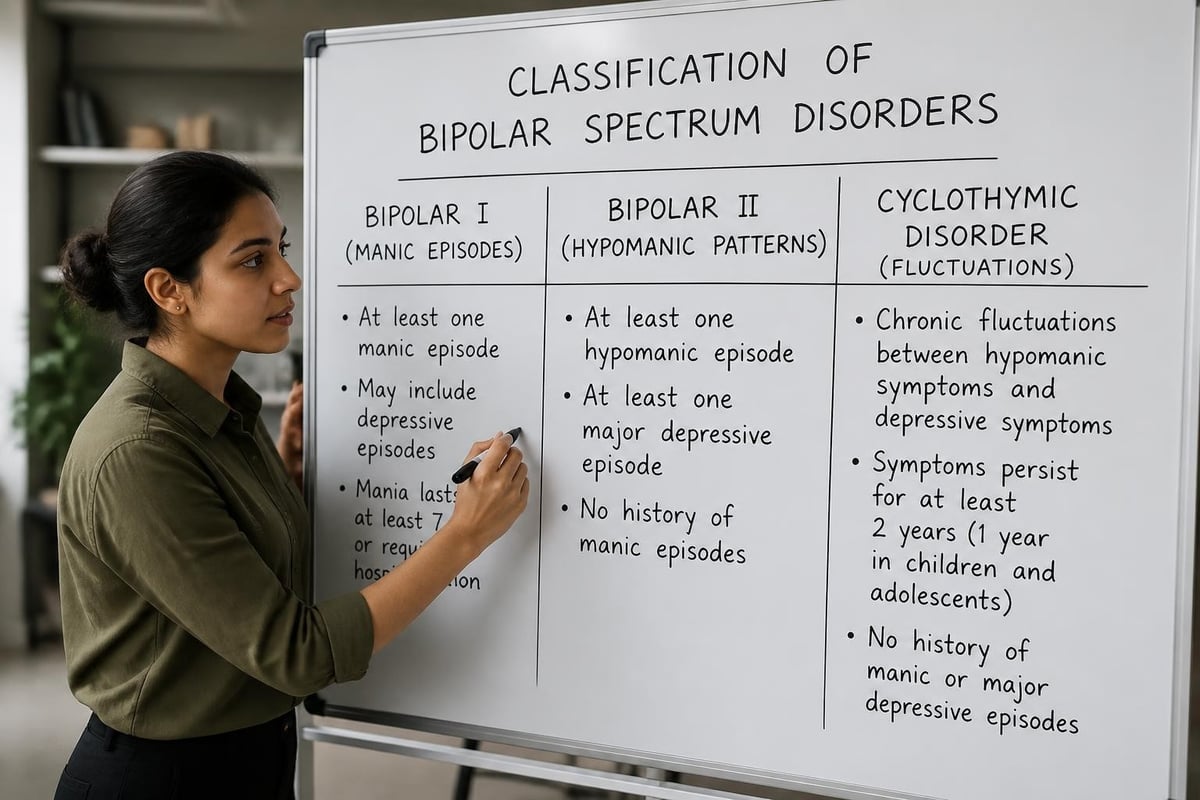
## Recognizing Symptoms Across Mood Episodes
The mental disorder bipolar manifests through distinct symptom patterns depending
on whether an individual experiences a manic, hypomanic, or depressive episode.
Recognition of these patterns supports early intervention.
### Manic Episode Indicators
Manic episodes represent periods of abnormally elevated, expansive, or irritable
mood. Key symptoms include:
1. Decreased need for sleep without feeling tired
2. Racing thoughts and rapid speech patterns
3. Inflated self-esteem or grandiosity
4. Increased goal-directed activity or agitation
5. Engaging in risky behaviors with potential negative consequences
6. Difficulty concentrating or easily distracted
7. Excessive involvement in pleasurable activities
These symptoms persist most of the day, nearly every day, for at least one week.
The severity often impairs social or occupational functioning significantly.
### Depressive Episode Characteristics
Depressive episodes in mental disorder bipolar mirror major depression symptoms:
* Persistent sad, empty, or hopeless feelings
* Loss of interest in previously enjoyed activities
* Significant weight changes or appetite fluctuations
* Sleep disturbances (insomnia or hypersomnia)
* Fatigue and energy loss
* Feelings of worthlessness or excessive guilt
* Concentration difficulties and indecisiveness
* Recurrent thoughts of death or suicide
The [World Health Organization](https://www.who.int/news-room/fact-sheets/detail/bipolar-disorder)
reports that bipolar disorder affects approximately 45 million people globally,
making it a significant public health concern.
| Episode Type | Duration | Key Features | Functional Impact |
| Manic | 7+ days | Elevated mood, decreased sleep, risky behavior | Severe impairment, possible hospitalization |
| Hypomanic | 4+ days | Similar to manic but less severe | Noticeable but not severely impairing |
| Depressive | 2+ weeks | Low mood, fatigue, hopelessness | Significant difficulty with daily tasks |
## Diagnostic Process and Professional Assessment
Accurate diagnosis of the mental disorder bipolar requires comprehensive evaluation
by qualified mental health professionals. The diagnostic process involves multiple
components to ensure precision.
### Clinical Interview and History
Mental health clinicians conduct thorough interviews examining:
1. Current symptoms and their duration
2. Family history of mental health conditions
3. Previous mood episodes and patterns
4. Medical history and current medications
5. Substance use history
6. Impact on relationships and functioning
This detailed exploration helps differentiate bipolar disorder from other conditions
with overlapping symptoms. [Comprehensive mental health services](https://www.alquimedez.com/health-counseling-center)
provide the structured environment necessary for accurate assessment.
### Standardized Assessment Tools
Professionals employ various validated instruments to evaluate symptoms systematically.
These tools measure mood severity, episode frequency, and functional impairment
objectively.
The [MedlinePlus overview](https://medlineplus.gov/ency/article/000926.htm) emphasizes
that proper diagnosis requires ruling out medical conditions that can mimic bipolar
symptoms, including thyroid disorders, neurological conditions, and medication side
effects.

## Treatment Approaches for Mental Disorder Bipolar
Managing the mental disorder bipolar effectively requires a multifaceted approach
combining medication, psychotherapy, and lifestyle modifications. Treatment plans
must be individualized based on symptom severity, episode type, and personal circumstances.
### Pharmacological Interventions
Medication forms the foundation of bipolar disorder treatment:
1. **Mood Stabilizers** prevent manic and depressive episodes (lithium, valproate)
2. **Atypical Antipsychotics** manage acute manic symptoms and maintenance
3. **Antidepressants** address depressive episodes (always combined with mood stabilizers)
4. **Anti-anxiety Medications** provide short-term relief during acute episodes
Medication management requires ongoing monitoring for effectiveness and side effects.
Some individuals explore [supplement options](https://doserank.com) as complementary
support, though any additions should be discussed with healthcare providers to avoid
interactions.
### Psychotherapeutic Support
Evidence-based therapy approaches significantly enhance treatment outcomes:
**Cognitive Behavioral Therapy (CBT)** helps individuals identify thought patterns
that trigger mood episodes and develop coping strategies. This structured approach
addresses negative thinking and behavioral patterns.
**Interpersonal and Social Rhythm Therapy (IPSRT)** focuses on stabilizing daily
routines and sleep schedules. Regular patterns support mood stability in people
with mental disorder bipolar.
**Family-Focused Therapy** involves family members in treatment, improving communication
and problem-solving skills. This approach recognizes that bipolar disorder affects
entire family systems.
**Psychoeducation** provides essential information about the condition, treatment
options, and self-management strategies. Understanding the disorder empowers individuals
to participate actively in their care.
### Lifestyle Modifications and Self-Management
Daily habits significantly influence mood stability:
1. Maintaining consistent sleep schedules
2. Avoiding alcohol and recreational drugs
3. Exercising regularly for mood regulation
4. Monitoring mood patterns and triggers
5. Building strong support networks
6. Managing stress through relaxation techniques
These practices complement professional treatment and reduce episode frequency.
[Mental health resources](https://www.alquimedez.com/women-and-mental-health) offer
additional guidance for implementing sustainable lifestyle changes.
## Special Considerations in Assessment Contexts
The mental disorder bipolar presents unique challenges in specific assessment situations
including court-mandated evaluations, immigration proceedings, and workplace accommodations.
### Court-Mandated Evaluations
Legal contexts require precise documentation of how bipolar disorder impacts behavior,
decision-making, and legal capacity. Evaluators must distinguish between actions
influenced by mental illness versus intentional choices.
Comprehensive forensic assessments examine:
1. Symptom history during relevant time periods
2. Treatment compliance and response
3. Impact on judgment and impulse control
4. Risk assessment for future episodes
5. Rehabilitation potential and prognosis
These evaluations inform judicial decisions while protecting individual rights.
[Specialized assessment services](https://www.alquimedez.com/using-the-mmpi-2-in-forensic-assessment)
provide the rigor necessary for legal proceedings.
### Immigration Psychological Evaluations
Immigration cases involving individuals with mental disorder bipolar require thorough
documentation of:
* Diagnosis and treatment history
* Current symptom management and stability
* Impact of potential deportation on mental health
* Access to treatment in country of origin
* Family support systems and their role
The [Substance Abuse and Mental Health Services Administration](https://www.samhsa.gov/mental-health/what-is-mental-health/conditions/bipolar)
emphasizes the importance of continuity of care for individuals with serious mental
illness.
## Co-Occurring Conditions and Complications
The mental disorder bipolar frequently occurs alongside other mental health conditions,
complicating diagnosis and treatment. Understanding these relationships improves
outcomes.
### Substance Use Disorders
Approximately 60% of individuals with bipolar disorder develop substance use problems
during their lifetime. Substances may be used to self-medicate symptoms or result
from impulsive behavior during manic episodes.
Integrated treatment addressing both conditions simultaneously produces better outcomes
than sequential treatment. [Substance abuse assessments](https://www.alquimedez.com/health-issues)
identify co-occurring disorders requiring specialized intervention.
### Anxiety Disorders
Anxiety disorders commonly accompany mental disorder bipolar, affecting treatment
response and quality of life. Symptoms may include:
* Generalized anxiety about daily events
* Panic attacks triggered by stress
* Social anxiety impairing relationships
* Obsessive-compulsive patterns
Treatment plans must address both conditions comprehensively rather than treating
them as separate issues.
### Attention Difficulties
Many individuals with bipolar disorder experience attention and executive function
challenges that persist between mood episodes. These difficulties may warrant [additional screening](https://www.alquimedez.com/screening-for-adhd)
to guide appropriate interventions.
| Co-Occurring Condition | Prevalence in Bipolar | Impact on Treatment | Assessment Priority |
| Substance Use Disorder | 40-60% | Complicates medication management | High |
| Anxiety Disorders | 50-75% | Increases episode severity | High |
| ADHD | 10-20% | Affects daily functioning | Medium |
| Eating Disorders | 5-15% | Requires specialized intervention | Medium |

## The Role of Support Systems
Family members, friends, and professional support networks play crucial roles in
managing the mental disorder bipolar effectively. Recovery rarely occurs in isolation.
### Family Education and Involvement
Families benefit from understanding:
1. Warning signs of emerging episodes
2. How to communicate during mood episodes
3. When to seek emergency intervention
4. The importance of treatment adherence
5. Self-care strategies for caregivers
Educational programs equip families with knowledge and skills to provide effective
support without enabling unhealthy behaviors.
### Professional Support Teams
Comprehensive care involves coordinated efforts from:
* Psychiatrists managing medication
* Therapists providing psychotherapy
* Primary care physicians monitoring physical health
* Case managers coordinating services
* Peer support specialists sharing lived experience
This multidisciplinary approach addresses the complexity of mental disorder bipolar
from multiple angles simultaneously.
## Workplace Considerations and Accommodations
The mental disorder bipolar can impact work performance, but many individuals maintain
successful careers with appropriate support and accommodations.
### Reasonable Workplace Modifications
Effective accommodations might include:
1. Flexible scheduling for medical appointments
2. Quiet workspace reducing sensory stimulation
3. Modified break schedules for medication timing
4. Clear, written instructions for complex tasks
5. Regular check-ins with supervisors
These modifications enable productivity while respecting medical needs. Corporate
training programs help employers understand mental health conditions and legal obligations.
### Disclosure Decisions
Individuals face complex decisions about disclosing their condition to employers.
Factors to consider include:
* Legal protections under the Americans with Disabilities Act
* Potential impact on career advancement
* Benefits of workplace support versus privacy concerns
* Severity of symptoms affecting work performance
Professional guidance helps individuals navigate these decisions strategically.
## Long-Term Management and Prognosis
The mental disorder bipolar represents a chronic condition requiring ongoing management
rather than a temporary illness with complete cure. Understanding this reality shapes
realistic expectations.
### Medication Adherence Challenges
Many individuals discontinue medication during periods of stability, often leading
to relapse. Common reasons include:
1. Side effect concerns
2. Missing the elevated mood of hypomania
3. Stigma about medication dependence
4. Financial barriers to treatment
5. Lack of perceived benefit
Addressing these barriers through education and support improves long-term outcomes.
The [National Institute of Mental Health statistics](https://www.nimh.nih.gov/health/statistics/bipolar-disorder)
indicate that consistent treatment significantly reduces episode frequency and severity.
### Monitoring and Prevention
Effective long-term management involves:
* Regular psychiatric appointments
* Mood tracking through journals or apps
* Recognizing early warning signs
* Adjusting treatment as needed
* Maintaining healthy lifestyle habits
Prevention strategies cannot eliminate all episodes but substantially reduce their
frequency and intensity.
## Crisis Intervention and Emergency Response
Despite best efforts, some individuals with mental disorder bipolar experience severe
episodes requiring immediate intervention. Knowing when and how to seek help protects
safety.
### Warning Signs Requiring Immediate Attention
Emergency intervention becomes necessary when individuals exhibit:
1. Suicidal thoughts or plans
2. Psychotic symptoms (hallucinations, delusions)
3. Severe manic behavior risking safety
4. Complete inability to care for basic needs
5. Threatening harm to others
These situations demand professional crisis intervention rather than waiting for
regular appointments.
### Emergency Resources and Planning
Advance planning facilitates effective crisis response:
* Identifying emergency contacts and preferred hospitals
* Creating crisis plans during stable periods
* Understanding involuntary commitment laws
* Documenting medication lists and treatment providers
* Establishing communication protocols with family
International crisis consulting services provide specialized support for complex
situations requiring coordinated intervention across multiple systems.
---
Understanding and managing the mental disorder bipolar requires comprehensive assessment,
evidence-based treatment, and ongoing support from qualified professionals. Whether
you need court-mandated evaluations, immigration psychological assessments, or general
mental health services, accessing specialized expertise makes a significant difference
in treatment outcomes and quality of life. [Alquimedez Mental Health Counseling](https://alquimedez.com)
provides comprehensive evaluations and treatment planning for individuals navigating
bipolar disorder and co-occurring conditions, offering the professional support
necessary for long-term stability and wellness.
```language-json
{
"@context": "https://schema.org",
"@graph": [
{
"@type": "Article",
"headline": "Mental Disorder Bipolar: Symptoms, Treatment & Support",
"description": "Comprehensive guide to understanding mental disorder bipolar including symptoms, treatment options, assessment processes, and professional support services.",
"image": "https://www.alquimedez.com/images/bipolar-disorder-treatment.jpg",
"author": {
"@type": "Organization",
"name": "Alquimedez Mental Health Counseling",
"url": "https://www.alquimedez.com"
},
"publisher": {
"@type": "Organization",
"name": "Alquimedez Mental Health Counseling",
"logo": {
"@type": "ImageObject",
"url": "https://www.alquimedez.com/logo.jpg"
}
},
"datePublished": "2026-08-08",
"dateModified": "2026-08-08",
"mainEntityOfPage": {
"@type": "WebPage",
"@id": "https://www.alquimedez.com/mental-disorder-bipolar"
}
},
{
"@type": "FAQPage",
"mainEntity": [
{
"@type": "Question",
"name": "What is mental disorder bipolar?",
"acceptedAnswer": {
"@type": "Answer",
"text": "Mental disorder bipolar, officially termed bipolar disorder, involves extreme mood episodes that cycle between manic or hypomanic highs and depressive lows. These episodes significantly disrupt personal relationships, work performance, and overall quality of life."
}
},
{
"@type": "Question",
"name": "What are the types of bipolar disorder?",
"acceptedAnswer": {
"@type": "Answer",
"text": "Bipolar disorder is classified into Bipolar I Disorder (with manic episodes), Bipolar II Disorder (with hypomanic and depressive episodes), Cyclothymic Disorder (chronic fluctuating moods), and Other Specified and Unspecified Bipolar Disorders."
}
},
{
"@type": "Question",
"name": "How is mental disorder bipolar treated?",
"acceptedAnswer": {
"@type": "Answer",
"text": "Treatment for mental disorder bipolar includes medication (mood stabilizers, antipsychotics, antidepressants), psychotherapy (CBT, IPSRT, family therapy), and lifestyle modifications including consistent sleep schedules, exercise, and stress management."
}
},
{
"@type": "Question",
"name": "What are the symptoms of manic episodes in bipolar disorder?",
"acceptedAnswer": {
"@type": "Answer",
"text": "Manic episode symptoms include decreased need for sleep, racing thoughts, inflated self-esteem, increased activity, engaging in risky behaviors, difficulty concentrating, and rapid speech patterns lasting at least one week."
}
}
]
},
{
"@type": "LocalBusiness",
"name": "Alquimedez Mental Health Counseling",
"description": "Comprehensive mental health services including assessments for substance abuse, court-mandated evaluations, immigration-related psychological evaluations, and specialized consulting services.",
"@id": "https://www.alquimedez.com",
"url": "https://www.alquimedez.com",
"telephone": "",
"address": {
"@type": "PostalAddress",
"addressLocality": "",
"addressRegion": "",
"addressCountry": "US"
},
"priceRange": "$$",
"openingHoursSpecification": {
"@type": "OpeningHoursSpecification",
"dayOfWeek": [
"Monday",
"Tuesday",
"Wednesday",
"Thursday",
"Friday"
],
"opens": "09:00",
"closes": "17:00"
}
},
{
"@type": "MedicalCondition",
"name": "Bipolar Disorder",
"alternateName": "Mental Disorder Bipolar",
"associatedAnatomy": {
"@type": "AnatomicalStructure",
"name": "Brain"
},
"signOrSymptom": [
{
"@type": "MedicalSymptom",
"name": "Manic Episodes"
},
{
"@type": "MedicalSymptom",
"name": "Depressive Episodes"
},
{
"@type": "MedicalSymptom",
"name": "Mood Swings"
}
],
"possibleTreatment": [
{
"@type": "MedicalTherapy",
"name": "Medication Management"
},
{
"@type": "MedicalTherapy",
"name": "Psychotherapy"
},
{
"@type": "MedicalTherapy",
"name": "Lifestyle Modifications"
}
]
}
]
}
```
## Understanding Mind Disorders: Diagnosis and Treatment Guide
- Link: https://www.alquimedez.com/mind-disorders
- Published: 2026-08-07T08:00:55+00:00
- Author:
Mental health challenges affect millions of Americans each year, with mind disorders
representing a broad spectrum of conditions that impact thinking, mood, behavior,
and overall functioning. Understanding these conditions is essential for proper
diagnosis, effective treatment, and supporting those navigating mental health challenges.
Professional mental health services provide comprehensive assessments and evidence-
based interventions that help individuals manage symptoms, improve quality of life,
and achieve meaningful recovery. Whether seeking support for personal concerns,
court-mandated evaluations, or immigration-related assessments, recognizing the
complexity of mind disorders is the first step toward effective treatment.
## Classification Systems for Mind Disorders
The mental health field relies on standardized classification systems to identify
and diagnose mind disorders accurately. [The Diagnostic and Statistical Manual of Mental Disorders, Fifth Edition (DSM-5)](https://www.ncbi.nlm.nih.gov/nlmcatalog/101604226)
serves as the primary diagnostic reference used by mental health professionals throughout
the United States. This comprehensive manual provides specific criteria for hundreds
of conditions, enabling clinicians to make consistent, reliable diagnoses.
### Traditional Diagnostic Frameworks
Mental health professionals utilize multiple approaches when evaluating mind disorders.
The DSM-5 organizes conditions into categories based on shared features, symptoms,
and underlying causes. Major categories include anxiety disorders, mood disorders,
psychotic disorders, trauma-related conditions, substance use disorders, and neurodevelopmental
disorders.
The International Classification of Diseases (ICD) offers another standardized system
used globally for medical coding and insurance purposes. While the DSM-5 provides
detailed diagnostic criteria, the ICD system facilitates communication across healthcare
systems and ensures accurate billing for mental health services.
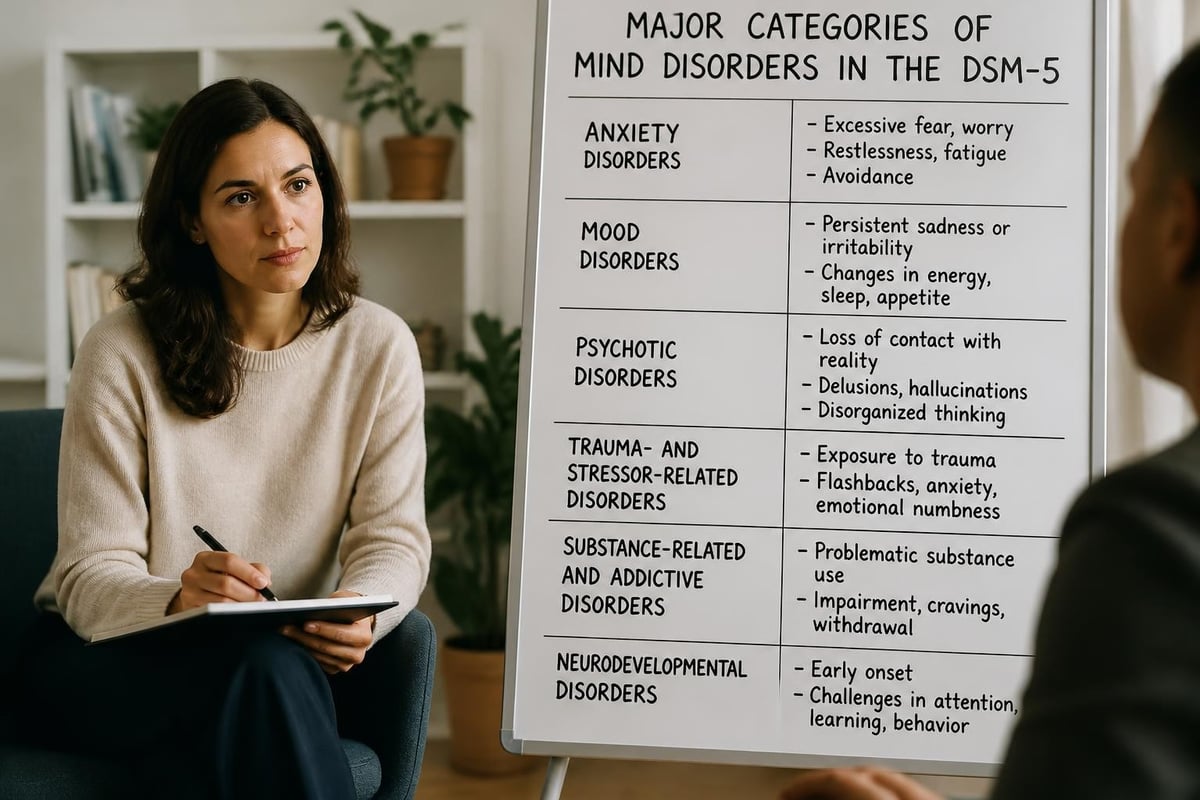
### Modern Research Approaches
[The Research Domain Criteria (RDoC) framework](https://www.nimh.nih.gov/research/research-funded-by-nimh/rdoc/about-rdoc)
represents an innovative approach to studying mind disorders beyond traditional
diagnostic categories. This system examines mental health conditions through dimensions
of observable behavior, neurobiological measures, and psychological processes. The
RDoC initiative aims to improve diagnosis and treatment by understanding the underlying
mechanisms of mental health challenges rather than relying solely on symptom-based
classification.
Different approaches to classification reflect the evolving understanding of mind
disorders as complex conditions influenced by biological, psychological, and environmental
factors. [Research continues to explore various frameworks](https://www.nimh.nih.gov/news/science-updates/2017/different-approaches-to-understanding-and-classifying-mental-disorders)
for categorizing and understanding mental health conditions.
## Common Categories of Mind Disorders
Mind disorders encompass numerous specific conditions, each with unique characteristics,
symptoms, and treatment requirements. Understanding these categories helps individuals
recognize when professional evaluation may be beneficial.
### Mood and Anxiety Disorders
Mood disorders affect emotional regulation and include conditions such as major
depressive disorder, bipolar disorder, and persistent depressive disorder. These
conditions involve sustained periods of sadness, hopelessness, elevated mood, or
irritability that significantly impair daily functioning. Approximately 21 million
American adults experienced at least one major depressive episode in 2025, highlighting
the prevalence of mood-related mind disorders.
Anxiety disorders represent another common category, characterized by excessive
fear, worry, and related behavioral disturbances. Generalized anxiety disorder,
panic disorder, social anxiety disorder, and specific phobias fall within this classification.
These conditions often co-occur with mood disorders and require specialized assessment
to differentiate symptoms and develop appropriate treatment plans.
### Psychotic and Thought Disorders
Psychotic disorders involve disruptions in thinking, perception, and reality testing.
Schizophrenia spectrum disorders represent the most recognized conditions in this
category, featuring symptoms such as hallucinations, delusions, disorganized thinking,
and negative symptoms like reduced emotional expression. Early intervention and
comprehensive treatment significantly improve outcomes for individuals experiencing
psychotic mind disorders.
Thought disorders may also manifest in other contexts, including during severe mood
episodes or following traumatic experiences. Professional evaluation helps distinguish
primary psychotic disorders from secondary symptoms associated with other mental
health conditions.
### Trauma-Related Conditions
Post-traumatic stress disorder (PTSD) and acute stress disorder develop following
exposure to traumatic events. These mind disorders involve intrusive memories, avoidance
behaviors, negative alterations in cognition and mood, and heightened arousal symptoms.
Trauma-related conditions commonly arise in contexts requiring [court-mandated mental health evaluations](https://www.alquimedez.com/mental-court)
or following experiences of violence, accidents, or life-threatening situations.
Developmental trauma and complex PTSD represent variations affecting individuals
who experienced prolonged or repeated traumatic experiences, particularly during
childhood. These conditions require specialized therapeutic approaches addressing
both trauma symptoms and broader psychological impacts.
| Disorder Category | Key Features | Common Symptoms | Typical Treatment Approaches |
| Mood Disorders | Emotional dysregulation | Depression, mania, mood swings | Psychotherapy, medication, lifestyle changes |
| Anxiety Disorders | Excessive fear/worry | Panic, avoidance, physical tension | CBT, exposure therapy, medication |
| Psychotic Disorders | Reality distortion | Hallucinations, delusions | Antipsychotics, supportive therapy |
| Trauma Disorders | Post-traumatic symptoms | Flashbacks, hypervigilance, avoidance | Trauma-focused therapy, EMDR |
## Assessment and Diagnosis Processes
Accurate diagnosis of mind disorders requires comprehensive evaluation by qualified
mental health professionals. The assessment process combines multiple information
sources to develop a complete understanding of presenting concerns.
### Initial Evaluation Components
Professional mental health assessments begin with detailed clinical interviews exploring
current symptoms, personal history, family background, medical conditions, and substance
use patterns. Mental health counselors gather information about symptom onset, duration,
severity, and impact on daily functioning. This foundational information guides
subsequent assessment activities.
Standardized assessment instruments provide objective measures of symptom severity
and functional impairment. These tools include self-report questionnaires, structured
diagnostic interviews, and clinician-rated scales. [Comprehensive mental health assessments](https://www.alquimedez.com/services-assessment)
may also incorporate cognitive testing, personality assessment, and specialized
evaluations for specific concerns.
### Specialized Evaluation Contexts
Certain situations require specialized assessment approaches tailored to specific
purposes. Court-mandated evaluations assess competency, risk factors, and treatment
needs within legal contexts. These evaluations follow strict protocols ensuring
reliability, validity, and admissibility in legal proceedings.
Immigration-related psychological evaluations document mental health conditions,
trauma histories, and treatment needs for individuals navigating immigration processes.
[These specialized assessments](https://www.alquimedez.com/competence-in-immigration-removal-proceedings)
require cultural competency and understanding of how mind disorders manifest across
diverse populations.

Substance abuse assessments evaluate patterns of use, dependence, and co-occurring
mental health conditions. Many individuals with mind disorders also struggle with
substance use, requiring integrated treatment addressing both concerns simultaneously.
### Differential Diagnosis Considerations
Accurate diagnosis requires distinguishing between conditions with overlapping symptoms.
Many mind disorders share common features such as sleep disturbances, concentration
difficulties, or mood changes. Mental health professionals consider multiple diagnostic
possibilities, ruling out alternative explanations through systematic evaluation.
Medical conditions, medication effects, and substance use can produce symptoms mimicking
primary mind disorders. Comprehensive assessment includes review of medical history,
current medications, and substance use patterns to identify potential physiological
contributors to presenting symptoms.
## Treatment Approaches and Interventions
Effective treatment for mind disorders typically involves multimodal approaches
combining evidence-based therapies, medication management when appropriate, and
supportive interventions addressing broader life circumstances.
### Psychotherapeutic Interventions
Cognitive-behavioral therapy (CBT) represents the most extensively researched psychotherapy
approach for mind disorders. CBT helps individuals identify and modify unhelpful
thought patterns, develop coping skills, and change behaviors maintaining psychological
distress. This structured, goal-oriented therapy demonstrates effectiveness for
anxiety disorders, depression, PTSD, and numerous other conditions.
Additional therapeutic approaches include:
1. Dialectical behavior therapy for emotion regulation difficulties
2. Interpersonal therapy addressing relationship patterns contributing to symptoms
3. Psychodynamic therapy exploring unconscious patterns and past experiences
4. Acceptance and commitment therapy promoting psychological flexibility
5. Family therapy involving loved ones in treatment process
Treatment selection depends on specific mind disorders, individual preferences,
and evidence supporting particular approaches for specific conditions. Many mental
health professionals integrate techniques from multiple therapeutic modalities tailored
to unique client needs.
### Medication Management
Psychotropic medications play important roles in treating many mind disorders. Antidepressants,
mood stabilizers, antipsychotics, and anti-anxiety medications help manage symptoms,
improving functioning and quality of life. Medication decisions require careful
evaluation of potential benefits, side effects, and individual health factors.
Integrated care models combining psychotherapy and medication management produce
optimal outcomes for moderate to severe mind disorders. Regular monitoring ensures
medications remain effective while minimizing adverse effects. Collaborative decision-
making between clients and providers supports medication adherence and treatment
satisfaction.
### Holistic and Supportive Interventions
Comprehensive treatment for mind disorders extends beyond traditional therapy and
medication. Lifestyle interventions including regular exercise, adequate sleep,
nutritious diet, and stress management techniques support mental health recovery.
[Maintaining a healthy mind](https://www.alquimedez.com/a-healthy-mind) requires
attention to physical health, social connections, and meaningful activities.
Supportive services may include case management, vocational rehabilitation, peer
support groups, and community resources. These interventions address practical challenges
associated with mind disorders, such as employment difficulties, housing instability,
or social isolation.
## Special Populations and Considerations
Mind disorders affect diverse populations with unique needs requiring culturally
responsive, developmentally appropriate interventions.
### Gender-Specific Factors
Research indicates significant gender differences in prevalence, presentation, and
treatment response across various mind disorders. [Women experience higher rates](https://www.alquimedez.com/women-and-mental-health)
of depression and anxiety disorders, while men show higher prevalence of substance
use disorders and antisocial personality disorder. Hormonal factors, social expectations,
and trauma exposure patterns contribute to these differences.
Gender-responsive treatment considers how societal factors, relationship patterns,
and biological differences influence mental health. Trauma-informed approaches recognize
the high prevalence of gender-based violence and its impact on psychological wellbeing.
### Developmental Considerations
Mind disorders manifest differently across the lifespan. [Developmental disorders](https://www.alquimedez.com/developmental-disorders)
emerge during childhood and adolescence, affecting learning, behavior, and social
functioning. Conditions such as attention-deficit/hyperactivity disorder, autism
spectrum disorder, and learning disabilities require early identification and intervention.
Older adults face unique mental health challenges including late-onset depression,
anxiety related to health concerns, and cognitive decline. Age-appropriate assessment
distinguishes normal aging from pathological processes requiring intervention.
### Cultural and Linguistic Factors
Cultural background significantly influences how individuals experience, express,
and seek help for mind disorders. Symptoms may manifest differently across cultures,
with some emphasizing physical complaints while others focus on emotional distress.
Mental health professionals must demonstrate cultural competency, understanding
diverse perspectives on mental health and healing.
Language barriers, immigration stress, and acculturation challenges affect mental
health service access and utilization. Bilingual services and culturally adapted
interventions improve engagement and outcomes for diverse communities.

## Emerging Trends and Future Directions
The mental health field continues evolving, with advances in neuroscience, technology,
and treatment approaches expanding options for addressing mind disorders.
### Technology-Enhanced Care
Telehealth services have transformed mental health care delivery, increasing access
for individuals in rural areas, those with mobility limitations, or those preferring
remote services. Video-based therapy sessions demonstrate comparable effectiveness
to in-person treatment for many mind disorders. Digital mental health tools including
smartphone applications, online self-help programs, and virtual reality exposure
therapy supplement traditional interventions.
Emerging technologies enable continuous symptom monitoring, early intervention when
warning signs appear, and personalized treatment adjustments based on real-time
data. These innovations promise to enhance treatment precision and responsiveness.
### Precision Medicine Approaches
Research increasingly recognizes heterogeneity within diagnostic categories, with
individuals receiving the same diagnosis experiencing different underlying mechanisms
and responding differently to treatments. Precision medicine aims to match individuals
with optimal interventions based on genetic, neurobiological, and psychological
characteristics.
[Innovative research frameworks](https://www.nimh.nih.gov/news/science-updates/2024/revolutionizing-the-study-of-mental-disorders)
examine biological markers, brain imaging findings, and treatment response patterns
to identify subtypes within traditional diagnostic categories. These advances may
enable more targeted, effective interventions for specific mind disorders.
### Integrated and Collaborative Care Models
Healthcare systems increasingly recognize the importance of integrating mental health
services with primary care, substance abuse treatment, and specialty medical services.
Collaborative care models position mental health professionals within primary care
settings, facilitating early identification and treatment of mind disorders. This
integration reduces stigma, improves access, and addresses the bidirectional relationships
between physical and mental health.
Multidisciplinary teams including psychiatrists, psychologists, counselors, social
workers, peer specialists, and primary care providers collaborate to deliver comprehensive,
coordinated care. Team-based approaches prove particularly effective for complex
cases involving multiple co-occurring conditions.
## Recovery and Long-Term Management
Recovery from mind disorders represents an ongoing process rather than a fixed endpoint.
Many individuals achieve significant symptom improvement, restored functioning,
and enhanced quality of life through appropriate treatment and support.
### Recovery-Oriented Principles
Contemporary mental health services emphasize recovery-oriented care recognizing
each individual's capacity for growth and wellness. Recovery-focused approaches
prioritize:
1. Hope and optimism about possibilities for improvement
2. Person-centered care respecting individual goals and preferences
3. Empowerment through shared decision-making and self-management skills
4. Holistic attention to all life domains beyond symptom reduction
5. Peer support connecting individuals with lived experience
Recovery looks different for each person, encompassing symptom management, functional
improvement, meaningful relationships, purposeful activities, and personal growth.
Mental health professionals support individuals in defining and pursuing their unique
recovery paths.
### Relapse Prevention and Wellness Maintenance
Long-term management of mind disorders often involves preventing symptom recurrence
and maintaining gains achieved through treatment. Relapse prevention strategies
include recognizing early warning signs, implementing coping skills, maintaining
healthy routines, and accessing support when needed. Regular follow-up appointments
enable ongoing monitoring and timely intervention if concerns arise.
Wellness maintenance extends beyond absence of symptoms to actively cultivating
positive mental health. Building resilience, nurturing supportive relationships,
engaging in meaningful activities, and practicing self-care contribute to sustained
wellbeing. Many individuals with mind disorders lead fulfilling, productive lives
through effective management and ongoing self-care practices.
| Recovery Stage | Focus Areas | Key Activities | Professional Support |
| Acute Treatment | Symptom reduction | Intensive therapy, medication | Frequent sessions, crisis intervention |
| Stabilization | Skill development | Practice coping strategies | Regular appointments, skill coaching |
| Recovery | Functional restoration | Resume activities, rebuild relationships | Periodic check-ins, maintenance sessions |
| Wellness | Health optimization | Prevention, personal growth | As-needed consultation, wellness support |
## Professional Resources and Support Systems
[The National Institute of Mental Health provides comprehensive information](https://www.nimh.nih.gov/health)
about various mind disorders, treatment options, and research advances. This authoritative
resource helps individuals understand conditions, explore treatment possibilities,
and stay informed about emerging developments in mental health care.
Professional mental health services offer specialized expertise in assessing, diagnosing,
and treating mind disorders across diverse populations and contexts. Qualified counselors,
psychologists, and psychiatrists bring evidence-based knowledge and clinical skills
to support individuals navigating mental health challenges.
Support systems extend beyond professional services to include family members, friends,
peer support groups, and community resources. [Mental health counseling centers](https://www.alquimedez.com/health-counseling-center)
provide centralized access to comprehensive services addressing various needs from
initial assessment through ongoing treatment and support.
---
Understanding mind disorders requires recognizing their complexity, diverse manifestations,
and the personalized nature of effective treatment. Professional mental health services
provide the expertise, assessment capabilities, and evidence-based interventions
necessary for accurate diagnosis and comprehensive care. Whether you need court-
mandated evaluations, immigration-related assessments, substance abuse evaluations,
or general mental health support, [Alquimedez Mental Health Counseling](https://alquimedez.com)
offers specialized services tailored to your unique circumstances. Contact our experienced
team today to schedule a comprehensive assessment and begin your path toward improved
mental health and wellbeing.
## Schema Markup
```language-json
{
"@context": "https://schema.org",
"@graph": [
{
"@type": "Article",
"headline": "Understanding Mind Disorders: Diagnosis and Treatment Guide",
"description": "Comprehensive guide to mind disorders, diagnosis methods, and treatment options. Learn how mental health professionals evaluate and support recovery.",
"author": {
"@type": "Organization",
"name": "Alquimedez Mental Health Counseling"
},
"publisher": {
"@type": "Organization",
"name": "Alquimedez Mental Health Counseling",
"logo": {
"@type": "ImageObject",
"url": "https://www.alquimedez.com/logo.png"
}
},
"datePublished": "2026-08-07",
"dateModified": "2026-08-07",
"mainEntityOfPage": {
"@type": "WebPage",
"@id": "https://www.alquimedez.com/mind-disorders"
}
},
{
"@type": "LocalBusiness",
"name": "Alquimedez Mental Health Counseling",
"description": "Alquimedez Mental Health Counseling provides comprehensive mental health services including assessments for substance abuse, court-mandated evaluations, and immigration-related psychological evaluations.",
"@id": "https://www.alquimedez.com",
"url": "https://www.alquimedez.com",
"telephone": "",
"priceRange": "$$",
"address": {
"@type": "PostalAddress",
"addressCountry": "US"
},
"areaServed": "United States",
"hasOfferCatalog": {
"@type": "OfferCatalog",
"name": "Mental Health Services",
"itemListElement": [
{
"@type": "Offer",
"itemOffered": {
"@type": "Service",
"name": "Substance Abuse Assessment"
}
},
{
"@type": "Offer",
"itemOffered": {
"@type": "Service",
"name": "Court-Mandated Evaluations"
}
},
{
"@type": "Offer",
"itemOffered": {
"@type": "Service",
"name": "Immigration-Related Psychological Evaluations"
}
},
{
"@type": "Offer",
"itemOffered": {
"@type": "Service",
"name": "International Crisis Consulting"
}
},
{
"@type": "Offer",
"itemOffered": {
"@type": "Service",
"name": "Corporate Training"
}
},
{
"@type": "Offer",
"itemOffered": {
"@type": "Service",
"name": "Bariatric Counseling"
}
}
]
}
},
{
"@type": "FAQPage",
"mainEntity": [
{
"@type": "Question",
"name": "What are mind disorders?",
"acceptedAnswer": {
"@type": "Answer",
"text": "Mind disorders are mental health conditions that affect thinking, mood, behavior, and overall functioning. They include anxiety disorders, mood disorders, psychotic disorders, trauma-related conditions, substance use disorders, and neurodevelopmental disorders."
}
},
{
"@type": "Question",
"name": "How are mind disorders diagnosed?",
"acceptedAnswer": {
"@type": "Answer",
"text": "Mind disorders are diagnosed through comprehensive evaluations that include clinical interviews, standardized assessment instruments, review of medical history, and sometimes specialized testing. Mental health professionals use diagnostic frameworks like the DSM-5 to ensure accurate, consistent diagnosis."
}
},
{
"@type": "Question",
"name": "What treatments are available for mind disorders?",
"acceptedAnswer": {
"@type": "Answer",
"text": "Treatment for mind disorders typically involves psychotherapy (such as CBT), medication management when appropriate, and supportive interventions. Holistic approaches including lifestyle changes, stress management, and community support enhance treatment effectiveness."
}
},
{
"@type": "Question",
"name": "Can people recover from mind disorders?",
"acceptedAnswer": {
"@type": "Answer",
"text": "Yes, many people achieve significant improvement and recovery from mind disorders through appropriate treatment and support. Recovery is an ongoing process that may include symptom management, restored functioning, and enhanced quality of life."
}
}
]
}
]
}
```